


Apple Tree Pruning in Campbell River: DIY or Hire a Pro?
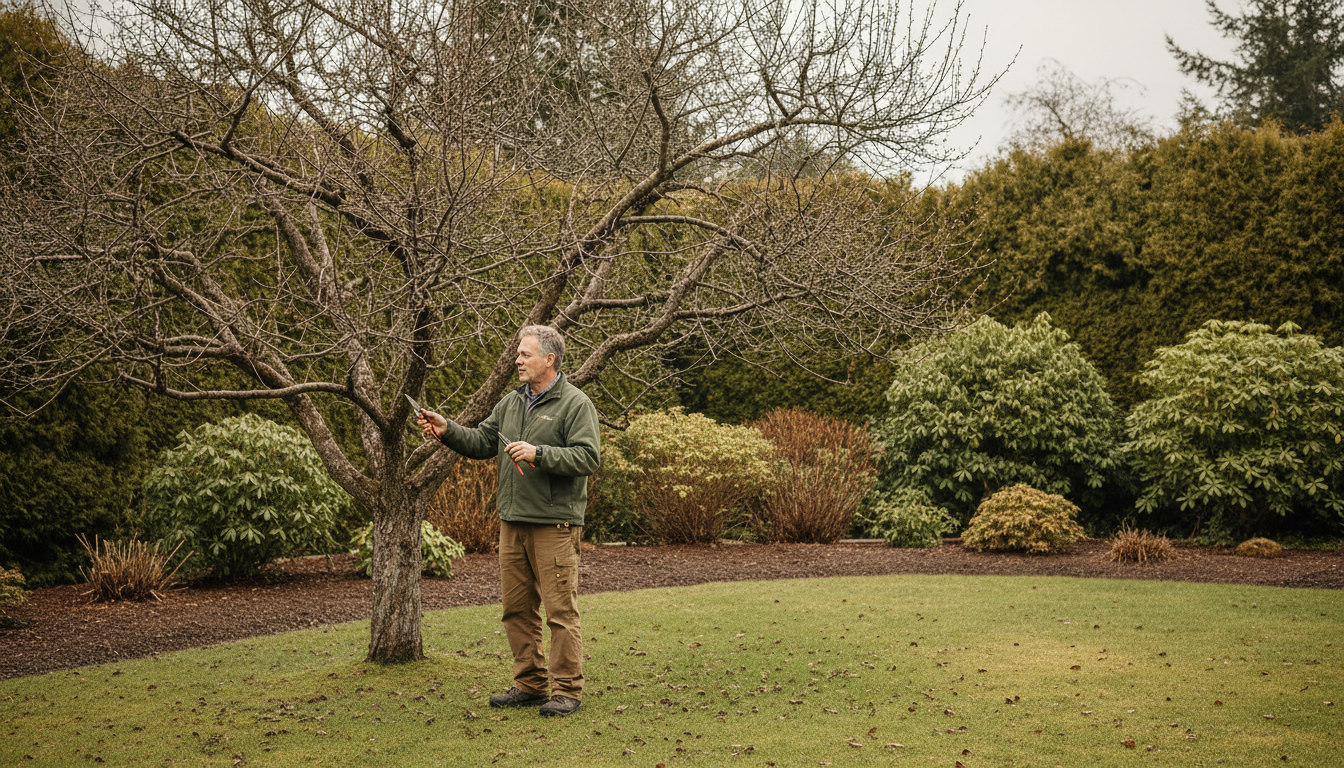
Quick answer: Prune a small, healthy apple tree yourself if you can make every cut from the ground with hand tools. Hire a pro if the tree is tall or old, a cut needs a ladder or chainsaw, branches are near power lines, or a storm has damaged it. On the coast the best window for most apple pruning is the dormant season, after leaf drop and before buds swell.
DIY or pro: a quick decision guide
Most apple tree problems in Campbell River and the Comox Valley come from two things: pruning at the wrong time, and pruning too hard. Both are easy to avoid on a small tree, and both get riskier as the tree gets bigger. Use this table to decide.
Rule of thumb: if you would need to leave the ground, hire it out.
DIY apple pruning: tools and checklist
Tools you actually need
- Bypass hand pruners for twigs and small branches
- Loppers for branches up to about 3-4 cm
- A curved pruning saw for anything thicker
- A pole pruner for high branches you can still reach from the ground
- Gloves and eye protection
- Rubbing alcohol or a disinfectant wipe to clean blades between trees
Step-by-step
- Wait for the dormant season, on a dry day above freezing.
- Remove the three Ds first: dead, damaged and diseased wood, cutting back to healthy tissue.
- Remove branches that cross or rub, keeping the stronger one.
- Open the centre so light and air reach the fruiting wood; apples need sun to colour and ripen.
- Take out water sprouts (fast vertical shoots) and suckers at the base.
- Stand back, look at the whole tree, and stop. Remove no more than about a quarter of the canopy in one year. [VERIFY BEFORE PUBLISHING: arborist to confirm]
Common mistakes to avoid
- Topping the tree, which causes a thicket of weak sprouts
- Flush cuts that remove the branch collar and slow healing
- Leaving stubs, which rot back into the branch
- Heavy pruning in fall, when wounds heal slowly
- Painting cuts with wound dressing, which is not recommended for healthy trees
For month-by-month timing, see our apple tree pruning guide for BC. For other fruit, see when to prune apple, pear, plum and cherry.
When to hire a pro
Hiring out is not about laziness. It is about the point where the work stops being gardening and becomes working at height with cutting tools.
- Tall or old trees. Once you need a ladder, the risk goes up fast.
- Heavy limbs. Large branches need the right cuts (often three-cut method) so they do not split the trunk.
- Storm damage. Torn and hanging limbs can drop without warning. See our winter storm prep checklist.
- Overgrown trees. A pro can plan a multi-year restoration instead of one drastic cut.
- Signs of disease. Cankers, dieback or oozing bark are worth an arborist's opinion.
- Anywhere near power lines. Contact BC Hydro; do not prune around lines.
What a professional pruning visit includes
- Assessment: the pro looks at structure, health, size and access before touching the tree.
- A plan: what stays, what goes, and the goal (shape, light, fruit, or safety).
- Correct cuts: clean, sharp tools and cuts made at the branch collar.
- Cleanup and haul-away: [OWNER TO FILL: confirm cleanup and haul-away is included with fruit tree pruning]
- Follow-up advice: when to prune again and what to watch for.
Dream Team's pruning service is built around that process. If a tree is beyond what our crews should do safely, we will say so and point you to a certified arborist. [OWNER TO FILL: edit to match your real size and scope limits]
How much does apple tree pruning cost?
Price depends on tree size and height, access, how overgrown the tree is, how many trees you have, and disposal. [OWNER TO FILL: typical cost range for a standard apple tree visit in Campbell River and the Comox Valley]. Ask for an itemized written quote that says whether cleanup and haul-away is included.
Bundling helps. Pruning several trees or combining it with a fall yard cleanup or hedge trimming in one visit usually saves on travel and setup.
How to make a proper pruning cut
Where and how you cut matters as much as what you cut. For any branch too heavy to hold with one hand, use the three-cut method so the branch cannot tear a strip of bark off the trunk as it falls.
- Undercut: about 25-30 cm (10-12 in) out from the trunk, cut a third of the way up from the bottom.
- Top cut: a few centimetres further out, cut down from the top until the branch drops.
- Final cut: remove the remaining stub just outside the branch collar, the slightly swollen ring where the branch meets the trunk. Do not cut flush.
Thin branches can go in one cut, just above an outward-facing bud or a side branch. Cut at a slight angle so water runs off.
Pruning by tree age: young, mature and overgrown
Young trees (first three years)
The goal is structure. Choose a strong leader or an open framework, remove competing shoots and keep the branches spaced around the trunk. Light cuts only: a young tree that is pruned hard will put its energy into leaves, not roots or fruit.
Mature, productive trees
Annual light pruning is enough: the three Ds, crossing branches, a bit of thinning to let light in, and removal of water sprouts. Aim to keep fruit within reach of the ground.
Overgrown or neglected trees
Spread the work over two or three winters. In the first winter, remove dead, damaged and diseased wood and the largest problem branches, staying well under a quarter of the canopy. In the second and third winters, keep opening the structure. Cutting everything in one year triggers a flush of weak sprouts and can shock the tree. [VERIFY BEFORE PUBLISHING: arborist to confirm restoration guidance]
Ladder, tool and power line safety
- Keep three points of contact on a ladder and never lean out to reach a cut; move the ladder instead.
- Do not use ladders in wind, rain or on soft or sloping ground.
- Never use a chainsaw on a ladder.
- Wear eye protection and gloves, and keep a clear fall zone under the branch.
- Stay away from power lines. Call BC Hydro for branches touching or near lines.
- If a task makes you hesitate, that is your answer: hire it out.
Common apple pruning myths
- "Prune hard to get more fruit." Heavy pruning usually produces leafy sprouts and less fruit.
- "Seal every cut." Healthy trees close their own wounds; clean cuts matter more than dressing.
- "Any time is fine." Timing affects healing and disease; see our pruning calendar.
- "Remove all the small branches inside." The fruiting wood is in the canopy; thin it, do not strip it.
FAQ
Can I prune my own apple tree?
Yes, if it is small enough that every cut can be made from the ground with hand tools. Use clean, sharp tools, remove dead and damaged wood first, and avoid removing more than about a quarter of the canopy in one year.
What month is best to prune apple trees on Vancouver Island?
The dormant season, after leaf drop and before buds swell, is the usual window for apples. See our month-by-month pruning guide for details.
Is it safe to prune near power lines?
No. Do not prune branches near power lines. Contact BC Hydro, and use a qualified professional for any work around lines.
Do I need to seal pruning cuts?
No. Healthy trees close pruning wounds on their own, and wound paint is not generally recommended. Make clean cuts at the branch collar instead.
How often should apple trees be pruned?
Most apple trees do best with light pruning every year. Light annual pruning is easier and safer than a big cut after years of neglect.
What tools do I need to prune an apple tree?
Bypass pruners, loppers, a curved pruning saw, a pole pruner for reachable high branches, gloves, eye protection and a way to disinfect blades.
How do I cut a large apple branch safely?
Use the three-cut method: an undercut, a top cut further out, then a final cut just outside the branch collar. For branches you cannot control, hire a pro.
Get a pruning quote
Tell us about your trees and we will give you a clear, itemized quote with cleanup details before any work starts.
Get a Pruning Quote | Call 250-580-1992 | Email
READY TO TRANSFORM YOUR GARDEN?
Relates Articles
Real landscaping advice from our team—seasonal tips, project ideas, and maintenance wisdom earned over 30 years on Vancouver Island.