The Ultimate Fall Lawn Care Guide: 5 Critical Tasks for Winter Preparation
What Makes Our Coastal Climate Different
Living in Campbell River and the Islands means dealing with:
- Mild winters that keep grass growing longer than other regions
- Heavy fall rain that can wash away nutrients if applied incorrectly
- Compacted soils from constant moisture
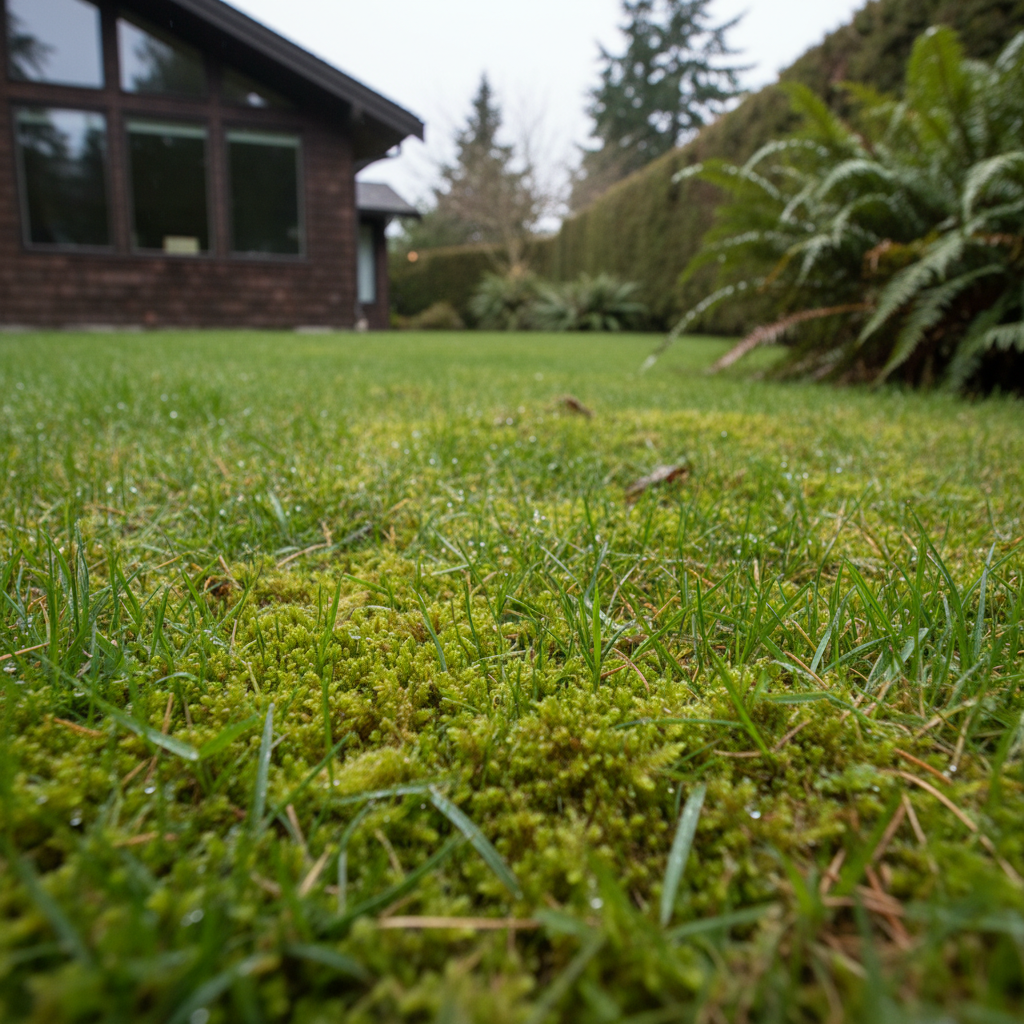
- Moss pressure that increases in shaded, damp areas
- Salt spray affecting coastal properties
These conditions require a different approach than you’ll find in generic lawn care guides. We’ll show you exactly how to work with our climate, not against it.
The 5 Essential Fall Tasks (In the Right Order)
Success comes from doing these tasks in the correct sequence. Each step prepares your lawn for the next, maximizing your results:
- Mow Smart and Remove Debris – Prepare the surface
- Apply Winterizer Fertilizer – Feed the roots
- Aerate Compacted Soil – Open up the ground
- Overseed Bare Spots – Fill in thin areas
- Adjust Your Watering – Set up for winter success
Let’s walk through each step.
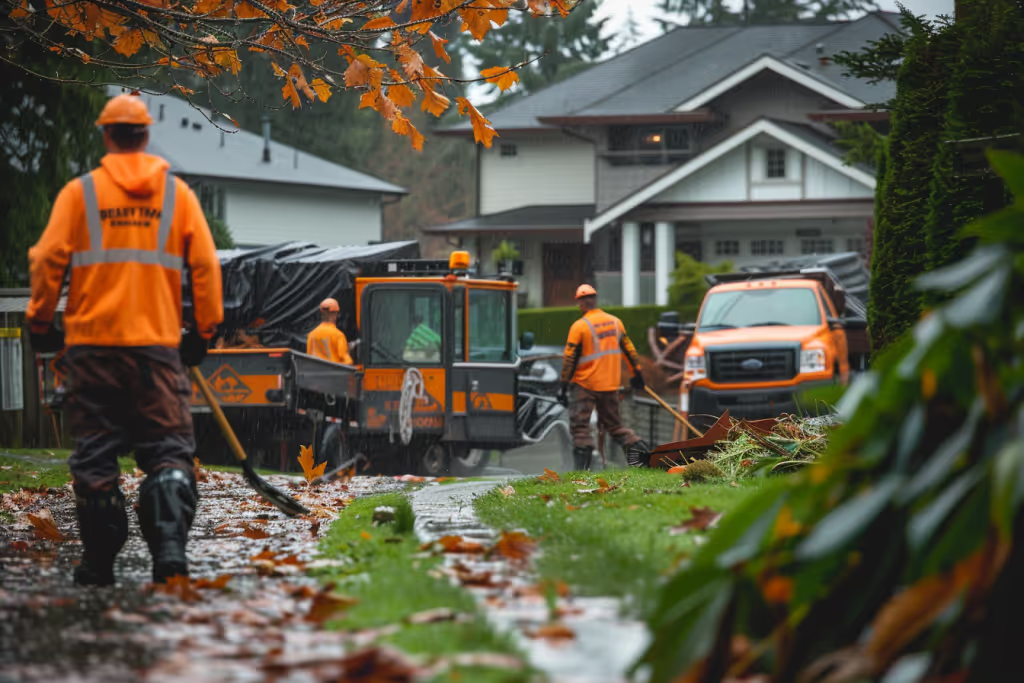
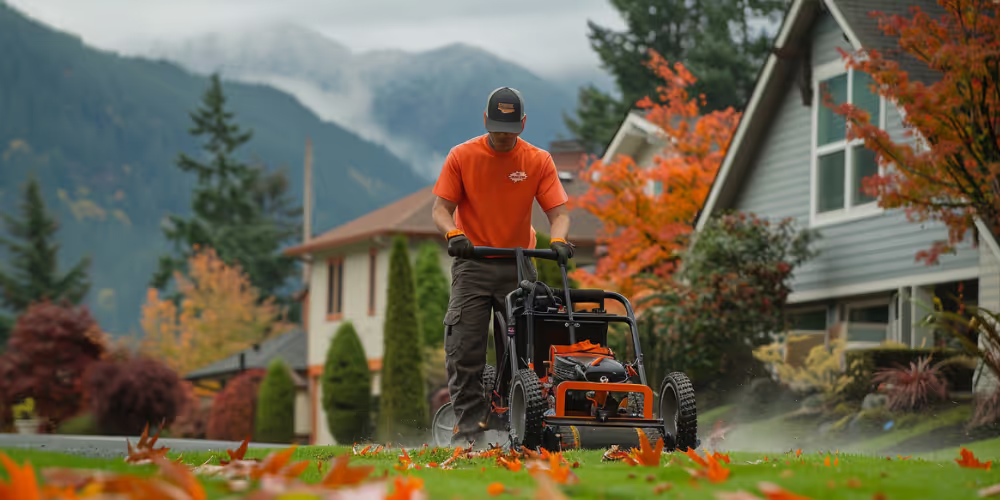
Task 1: Smart Mowing and Leaf Removal
Why This Matters: A clean, properly mowed surface allows air and light to reach your grass crowns, preventing disease and creating the perfect seedbed for overseeding.
Gradual Height Reduction
- Start reducing your mowing height by about half an inch per cut
- Aim for a final height of 2.5-3 inches (never scalp your lawn)
- Sharp blades are crucial—dull blades tear grass and create entry points for disease
Dealing With Our Coastal Leaf Fall
Our coastal storms can dump massive amounts of leaves and debris quickly. Here’s how to handle it:
Light Coverage (less than 1/3 of grass visible):
- Mulch with your mower to recycle nutrients back into the soil
- This works great for dry maple or alder leaves
Heavy Coverage or Wet Mats:
- Rake and remove completely
- Wet leaf mats are breeding grounds for fungal diseases
- Also remove cedar cones, storm debris, and anything that blocks light
Pro Tip: After heavy coastal storms, always clear debris before mowing to prevent mower damage and ensure even cutting.
Task 2: Fall Fertilizer Application (The “Winterizer”)
Why This Matters: Fall is when cool-season grass roots experience their biggest growth spurt. Proper fertilization now builds strong root systems that survive winter and green up faster in spring.
Choosing the Right Fertilizer for Our Climate
Look for a fertilizer with:
- Slow-release nitrogen – Won’t wash away in our heavy rains
- Higher potassium content – Improves winter hardiness
- Low or no phosphorus – Unless your soil test shows deficiency
Timing Is Everything
- Apply when soil temperature reaches 10-12°C (use a soil thermometer)
- Aim for before a light rain, but never before a major storm
- In our area, this typically means October to early November
Application Tips
- Calibrate your spreader properly
- Apply when grass blades are dry but soil is slightly moist
- Water in lightly if no rain is forecast within 24-48 hours
- Sweep granules off driveways and sidewalks to protect waterways
Task 3: Core Aeration – Opening Up Compacted Soil
Why This Matters: Our wet coastal climate creates compacted soil. Aeration creates spaces for air, water, and nutrients to reach grass roots.
Signs Your Lawn Needs Aeration
- Water pools on the surface after rain
- Grass looks thin despite regular watering
- Hard to push a screwdriver into the soil
- Moss is taking over (a sure sign of compaction)
Best Timing for Our Region
Early to mid-fall is ideal because:
- Soil is moist but not waterlogged
- Temperatures are cool enough to prevent stress
- Grass has time to recover before winter
- Less weed competition than spring
The Process
- Use a core aerator (not a spike aerator) that pulls 2-3 inch plugs
- Make multiple passes in different directions for high-traffic areas
- Leave the soil plugs on the surface—they’ll break down naturally
- Consider topdressing with a thin layer of compost after aerating
Task 4: Overseeding Bare and Thin Areas
Why This Matters: Fall is the perfect time to thicken your lawn. New grass planted now has cool, moist conditions to establish strong roots before winter.
Choosing Seed for Our Coast
Select varieties that handle our conditions:
- Perennial ryegrass – Fast germinating, salt tolerant near shorelines
- Fine fescue – Excellent for shade, drought tolerant once established
- Tall fescue – Extremely durable, good for high-traffic areas
Getting Good Seed-to-Soil Contact
This is crucial for germination:
- Best: Slit-seeding after aeration (professional equipment creates perfect seed beds)
- Good: Broadcasting seed then light raking
- Avoid: Just throwing seed on top of existing grass
Germination Window
- Soil temperature should be 10-18°C
- Keep seeded areas consistently moist (not soaked)
- Expect germination in 7-14 days for ryegrass, 14-21 for fescue
- Limit foot traffic until new grass is well-established
Task 5: Water Management and Irrigation Prep
Why This Matters: Proper watering supports seed germination while preventing overwatering during our rainy season. Plus, you need to protect your irrigation system before freezing weather hits.
Adjusting Your Watering Strategy
For Established Turf:
- Deep, infrequent watering (about once per week)
- Let natural rainfall do most of the work
- Use rain sensors to avoid watering during storms
For Newly Seeded Areas:
- Keep soil consistently moist with light, frequent watering
- May need daily watering in dry spells
- Reduce frequency as grass establishes
Winterizing Your Irrigation System
Even though our winters are mild, we do get occasional freezes:
- Shut off water supply to irrigation system
- Drain all lines or have them professionally blown out
- Protect backflow preventers with insulation
- Set controller to “rain” or “off” mode
When to DIY vs. Call the Professionals
Tasks Most Homeowners Can Handle:
- Regular mowing and leaf cleanup
- Light overseeding with a broadcast spreader
- Basic irrigation adjustments
Tasks Better Left to Professionals:
- Core Aeration: Professional equipment creates consistent, proper-depth holes
- Slit-Seeding: Specialized machines ensure perfect seed-to-soil contact
- Fertilizer Calibration: Proper application rates prevent burning and runoff
- Irrigation Winterization: Protects expensive systems from freeze damage
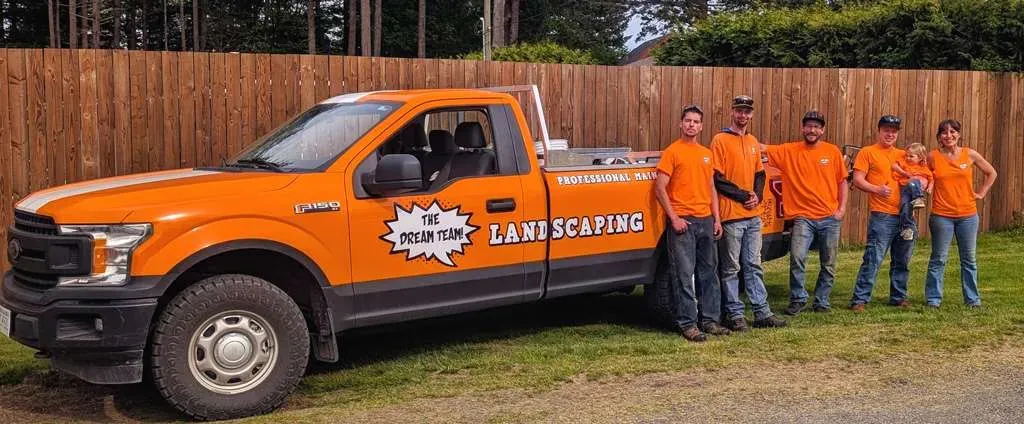
At Dream Team Landscaping, we see the difference professional equipment and expertise makes. Our core aerators create consistent 2-3 inch plugs, our slit-seeders ensure optimal germination rates, and our certified technicians protect your irrigation investment.
Your Fall Timeline for Campbell River & The Islands
August – September: Surface Prep
- Begin reducing mow height gradually
- Remove summer debris and assess your lawn’s condition
- Start planning your fall care approach
September – October: The Action Window
- Core aerate when soil is moist but not waterlogged
- Overseed immediately after aerating
- This is your prime window for these crucial tasks
October – November: Feed and Prepare
- Apply winterizer fertilizer when soil hits 10-12°C
- Continue light watering for new seed
- Monitor weather for irrigation winterization timing
November: Winter Prep
- Winterize irrigation before first hard freeze
- Final leaf cleanup
- Set up rain sensors and adjust controller settings
Common Coastal Lawn Problems and Solutions
Moss Taking Over Your Lawn?
This is our #1 issue on the coast. The solution isn’t just killing moss—it’s improving conditions:
- Improve drainage through aeration
- Reduce shade where possible
- Overseed with shade-tolerant fescues
- Apply iron-based moss control products
Thin Grass That Won’t Thicken?
Usually caused by:
- Compacted soil (needs aeration)
- Wrong grass type for conditions
- Poor seed-to-soil contact during overseeding
- Insufficient fall fertilization
Fertilizer Washing Away?
Our heavy rains can waste expensive fertilizer:
- Use only slow-release formulations
- Time applications before light rain, not storms
- Consider split applications rather than one heavy feeding
Why Fall Lawn Care Matters More Here
In many climates, spring is the focus for lawn care. But here on the coast, fall is actually more important because:
- Root Growth Peak: Cool-season grasses grow their strongest roots in fall
- Less Weed Competition: Fall seeding faces fewer weeds than spring
- Weather Cooperation: Consistent moisture without extreme heat
- Extended Growing Season: Our mild winters mean grass keeps growing longer
Take advantage of this extended growing season with proper fall care, and you’ll have the best-looking lawn on your street come spring.
Dream Team’s Comprehensive Fall Lawn Care Service
Don’t want to tackle all this yourself? We’ve designed our Coastal Fall Lawn Care Package specifically for properties in Campbell River, Comox Valley, Quadra, and Cortes Islands.
What’s Included:
- Professional mowing and complete debris removal
- Soil testing and customized winterizer application
- Core aeration with professional equipment
- Slit-seeding with region-appropriate seed blends
- Irrigation system winterization and setup
- 30-day guarantee on all work
Why Choose Dream Team:
- Local expertise in coastal conditions
- Professional equipment for consistent results
- Transparent, itemized pricing
- Insured crews and guaranteed scheduling
- Eco-friendly options available
We also offer Lawn Care and Garden Maintenance combo packages that handle your entire property in one visit—saving you time and coordination headaches.
Ready to Get Started?
Fall lawn care on the coast isn’t complicated, but timing and technique matter. Whether you tackle these tasks yourself or let our professional team handle them, the key is getting started while conditions are right.
Questions about your specific lawn conditions? Our team has worked with every soil type and microclimate from Campbell River to the outer islands. We’re happy to provide personalized advice based on your property’s unique needs.
Ready for professional fall lawn care? Contact us today to schedule your fall cleanup and lawn preparation service.
Your lawn doesn’t have to just survive our coastal winter—with the right care, it can emerge in spring healthier and more beautiful than ever. Let’s make it happen together.
READY TO TRANSFORM YOUR GARDEN?
Relates Articles
Real landscaping advice from our team—seasonal tips, project ideas, and maintenance wisdom earned over 30 years on Vancouver Island.