


Retaining Wall Drainage for Vancouver Island Yards: Why Walls Fail and How to Prevent It
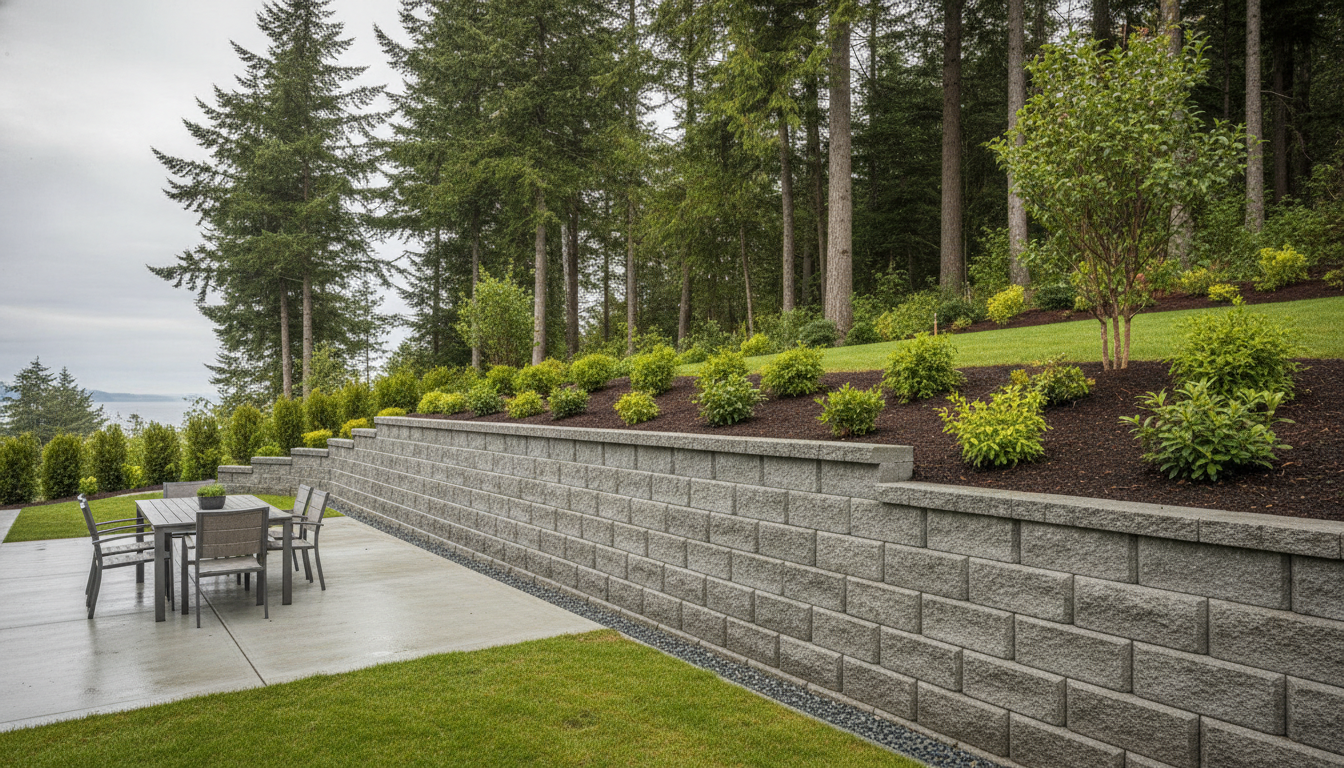
Most retaining wall problems start behind the wall, not on the face of it. By the time you see leaning blocks, bulging sections, cracked concrete, or soil pushing through gaps, water has usually been building pressure for a while.
Retaining wall drainage matters on Vancouver Island because wet months are long, slopes are common, and clay-heavy soil can hold water against structures. A wall that looks solid but has poor drainage is living on borrowed time.
Water pressure is the hidden reason many walls move
A retaining wall holds back soil. After heavy rain, that soil gets heavier and water pushes against the back of the wall. Without a way to drain, pressure builds. That pressure can move block walls, crack concrete, bow timber, or cause the base to settle unevenly.
Family Handyman’s retaining wall drainage guide points to poor drainage as a main reason retaining walls give way. That matches what homeowners often see after repeated winter storms: small movement at first, then faster failure once the wall has shifted out of line.
Watch for these signs:
- Wall face leaning outward
- Bulges or waves along the wall
- Soil washing through joints
- Water staining on the face
- Soft or sunken ground at the base
- Cracks in concrete or mortar
- Pooled water behind or below the wall
One sign does not always mean full replacement. Several signs together mean the wall needs a proper review before more weight, planting, fencing, or patio work is added near it.
Drainage stone, pipe, and filter fabric all have a job
A retaining wall drainage system is not just a pipe thrown behind the blocks. Each layer has a purpose.
Clean drainage stone creates space for water to move. A perforated drain pipe gives water a path out. Filter fabric helps keep soil from clogging the stone and pipe. The wall base supports the structure and helps keep movement under control.
If one part is missing or installed poorly, water can collect where it should not. Soil can migrate into the drainage zone. The pipe can clog. The wall can start to carry water pressure it was never meant to hold.
For Vancouver Island yards, outlets matter too. Water has to discharge somewhere safe. Sending it toward a foundation, neighbour, sidewalk, or lower patio creates a new problem.
Vancouver Island slopes need site-specific planning
A wall at the bottom of a small garden bed is different from a wall holding a sloped backyard above a patio. The more slope, water, and weight behind the wall, the more careful the plan needs to be.
Campbell River and Comox Valley properties often have one or more of these conditions:
- Sloped backyards
- Clay or compacted soil
- Roof runoff entering the wall area
- Old timber walls nearing the end of life
- Existing patios or walkways near the wall
- Planting beds that add irrigation or water retention behind the wall
This is why retaining wall work should connect with the wider yard plan. Dream Team’s landscape design and installation can account for walls, grades, planting, access, and future maintenance at the same time.
A wall should not be planned in isolation if the area around it is also changing.
Repair may work, but full rebuild is sometimes safer
Small drainage fixes can help when the wall is sound and the problem is mainly surface water. That might mean redirecting downspouts, improving grading, clearing outlets, or reducing water-heavy planting behind the wall.
A wall that is already leaning, cracked, or sliding may need more than a repair. Once movement has started, adding a pipe or gravel at the edge may not correct the base, backfill, or structure. In those cases, rebuilding the wall with proper drainage may be the safer long-term choice.
A fair assessment should explain which path fits:
- Monitor and maintain if the wall is stable
- Improve surface drainage if water is coming from above
- Repair limited sections if damage is local
- Rebuild if the wall has moved, cracked, or lost support
If you are also pricing the project, read Dream Team’s retaining wall installation cost guide for cost factors. This drainage article focuses on why walls fail and what the build should account for.
Concrete and hardscape work should not ignore wall drainage
Patios, walkways, and concrete pads near retaining walls need extra care. Hard surfaces can change where water goes. If a patio sends runoff toward a wall or blocks a drainage outlet, the wall may take on more water pressure than before.
Before adding concrete near a wall, check grades, outlets, base material, and where roof or slope water will go. Dream Team’s concrete services can be part of the plan when wall drainage, patio prep, and hardscape work overlap.
The best time to solve drainage is before the new surface is poured or the wall is rebuilt. After that, access becomes harder and fixes cost more.
If your wall is leaning, holding water, or sitting below a wet slope, request a free estimate. Dream Team can review the site, explain the options, and quote the work needed to protect the yard for the long term.
READY TO TRANSFORM YOUR GARDEN?
Relates Articles
Real landscaping advice from our team—seasonal tips, project ideas, and maintenance wisdom earned over 30 years on Vancouver Island.