Chain Link Fence and Posts: Expert Maintenance Guide
You know how fences always seem fine… until suddenly they’re not? One windy night, one stubborn dog, or one salty winter storm is all it takes for your chain link fence and posts to start showing their age. A tiny lean becomes a big sag. A small rust spot becomes a full-blown headache.
But keeping your fence sturdy isn’t about major repairs every year—it’s about small, easy wins. A seasonal walk-through, better hardware choices, and knowing when to call in a pro can add literal years to the life of your fence.
In this guide, you’ll get a clear look at what your fence needs, when it needs it, and how to stop small problems before they turn into a total replacement.
Start With a Quick 2-Minute Fence Health Check
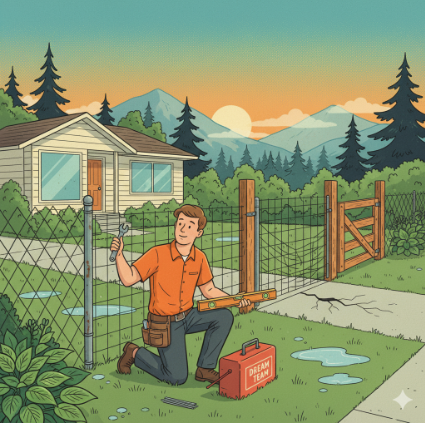
Take a slow walk along your fence and look for:
- Leaning posts or dips in the top rail
- Rust spots starting around ties, tension bands, or bottom wires
- Loose or broken ties (common in coastal wind zones)
- Sagging mesh or fabric pulling away from posts
- Gate issues like scraping, dragging, or misalignment
- Cracked or lifting concrete at post bases
- Pooling water around posts after rain
If two or more of these show up, the fence is warning you early—this is the right time to act.
Understanding Your Chain Link Fence and Posts
Before you repair or upgrade anything, it helps to know what each part does.
Where failures usually begin
- Line posts (8–10 ft apart): keep mesh upright
- Terminal & corner posts: handle all tension
- Gate posts: carry the most stress
- Bottom wire, ties, tension bands: often the first to corrode
- Concrete footings: crack or shift with frost and poor drainage
In coastal climates, lifespan depends heavily on materials.
Hot-dip galvanized steel (ASTM A123) outperforms cheap plating every time—saving money long-term.
A Seasonal Checklist Built for Coastal & PNW Weather
Think of this like a quick “oil change” for your fence—small seasonal tasks that prevent expensive structural failures.
SPRING — Reset After Frost and Wind
- Re-tension fabric
- Check every tie and bottom wire
- Inspect posts for frost heave
- Treat any rust before it spreads
SUMMER — Keep Growth Off the Mesh
- Cut back vegetation touching the fence
- Lubricate gate hinges
- Clean slats to reduce wind load
FALL — Storm Preparation
- Tighten loose bands
- Check bracing on corners and terminals
- Look for early sagging caused by summer heat or growth
WINTER (and after major storms)
- Check for bent rails
- Inspect concrete for cracking
- Take photos before repairs (useful for insurance or quotes)
Over a full year, these checks can add 5–10+ years to the lifespan of post and chain link fence systems.
Coastal & Island Corrosion Defense (Where Most Fences Fail)
Salt is relentless. It halves the lifespan of untreated hardware—and sneaks into cracks you don’t notice.
Smart habits that slow corrosion
- Rinse the fence with fresh water every 2–3 months within 500 m of the ocean
- Use vinyl-coated mesh to keep metal off soil
- Upgrade ties, fasteners, and bands to stainless steel
- Seal post caps to keep water inside from pooling
- Touch up scrapes with zinc-rich primer
Material choices that pay off
Material
Extra Lifespan
Maintenance Notes
Galvanized
Baseline
Rinse regularly
Vinyl-coated mesh
+5–10 yrs
Best for coastal yards
Stainless hardware
2–3× longer
Minimal upkeep
On islands, ferry delays make repairs slower—so stainless, sealed caps, and documented inspections save future headaches.
Common Problems and the Fastest Fixes
Leaning or Loose Posts
Often caused by frost heave or poor drainage.
A proper post reset (typically $150–$300) involves digging below frost depth and adding a stable footing—not just pushing the post straight.
Sagging Fabric
Usually fixed with re-tensioning, new bands, or a tension bar.
Broken Ties & Loose Bands
Expect to replace 10–15% yearly in coastal zones.
Keep spares on hand—they’re cheap, and failures spread quickly.
Gate Alignment Issues
If the gate drags, it often means deeper post movement.
Address the cause, not just the symptom.
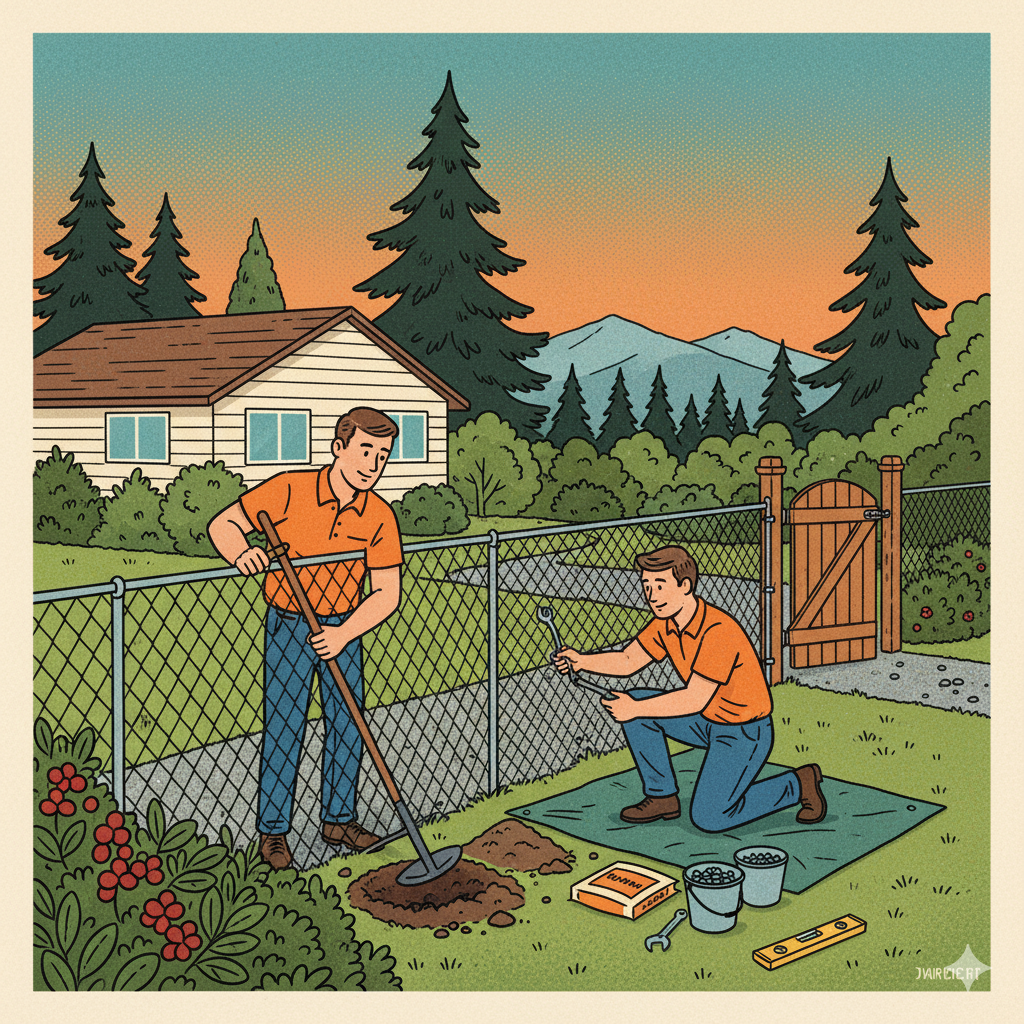
DIY vs Professional Repair—A Smart, Honest Breakdown
Good DIY Tasks
- Replace ties and caps
- Light lubrication
- Minor re-tensioning
- Cleaning and rust touch-ups
Hire a Pro When
- A post needs resetting in concrete
- Multiple posts are leaning
- You’re near buried utilities
- Gates or corners are involved
- You want a warranty-backed solution
In coastal/PNW regions, professional resets are often cheaper long-term because frost, salt, and wind make DIY fixes short-lived.
Budgeting, Longevity & When Replacement Is Better Than Repair
Before spending money, ask:
“Will this repair last, or will I be redoing it next season?”
General lifespan gains:
- Minor tightening: weeks–months
- Reset with gravel sleeve: 3–7 years
- Hybrid footing + stainless hardware: 10–20+ years
Replacement becomes smarter when:
- Several posts fail at once
- Rust runs deep
- Repair costs reach 50% of replacement
- The fence no longer meets code
Think total cost of ownership—not just today’s bill.
Eco-Friendly Ways to Extend Your Fence Life
- Use recycled-content steel
- Choose low-VOC primers and coatings
- Keep mesh raised off soil to prevent bottom-edge rust
- Recycle old mesh and remove failed sections responsibly
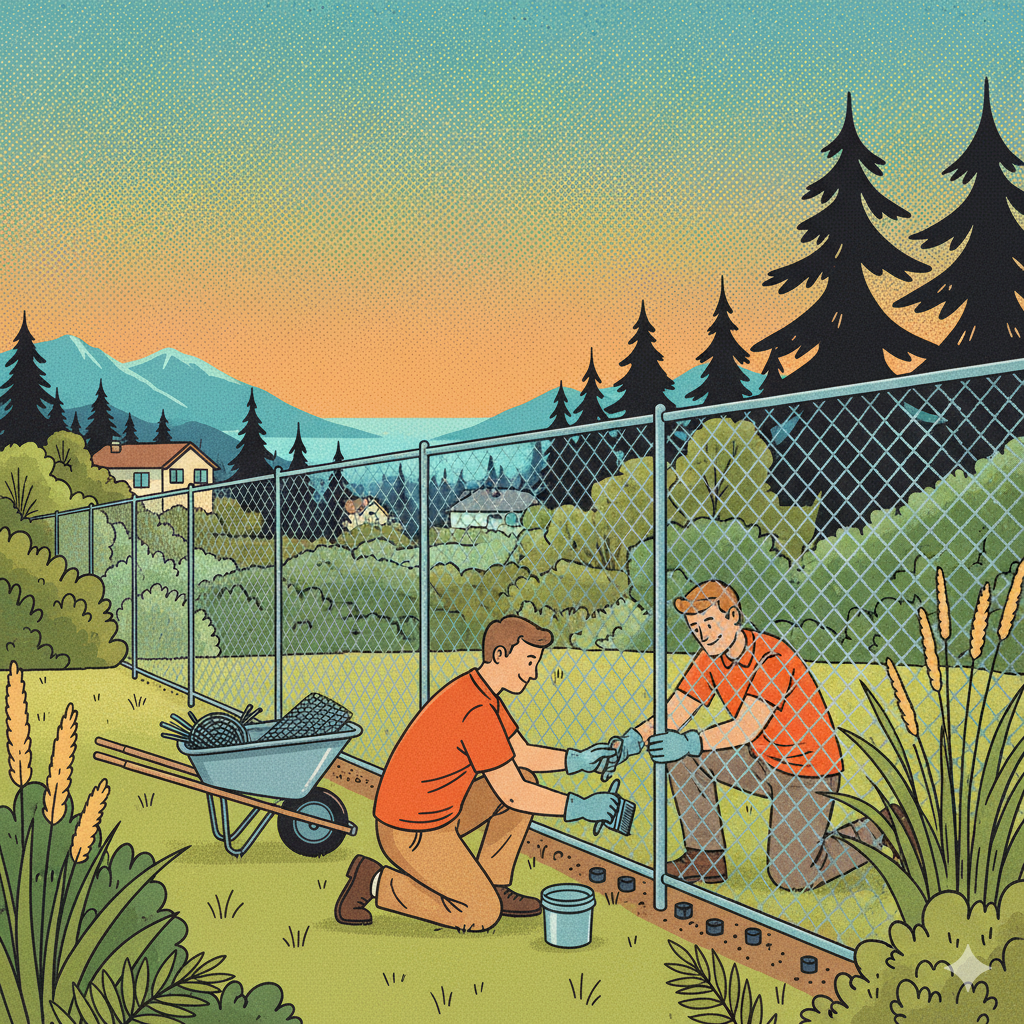
Safety, Codes & Permitting Basics
Before digging, always check:
- Property lines
- Local height limits (especially pools)
- BC One Call / locates
- Slatted fences’ higher wind requirements
Cutting corners here leads to fines or dangerous blowouts during storms.
Maintenance Plans That Remove Stress Entirely
Many homeowners choose scheduled plans because they’re predictable and worry-free.
A good plan includes:
- Seasonal tension checks
- Rust and hardware inspection
- Quarterly coastal rinses
- Gate and brace adjustments
- Photo documentation
For island clients, pre-packed hardware kits + ferry-window scheduling speed everything up.
How Dream Team Landscaping Keeps Your Fence Strong
From Campbell River to Quadra, Cortes, and Comox Valley, local conditions change fast. Our team builds for your terrain, your wind patterns, and your salt exposure.
You get:
- Photo-documented inspections
- Clear options and transparent pricing
- Stainless + vinyl upgrades for coastal yards
- Warranty-backed repairs
- Island-friendly scheduling
Ready for a fence that stays straight—and stays out of your worry list?
READY TO TRANSFORM YOUR GARDEN?
Relates Articles
Real landscaping advice from our team—seasonal tips, project ideas, and maintenance wisdom earned over 30 years on Vancouver Island.