


Transform Your Chain Link Fence with Privacy Enhancements
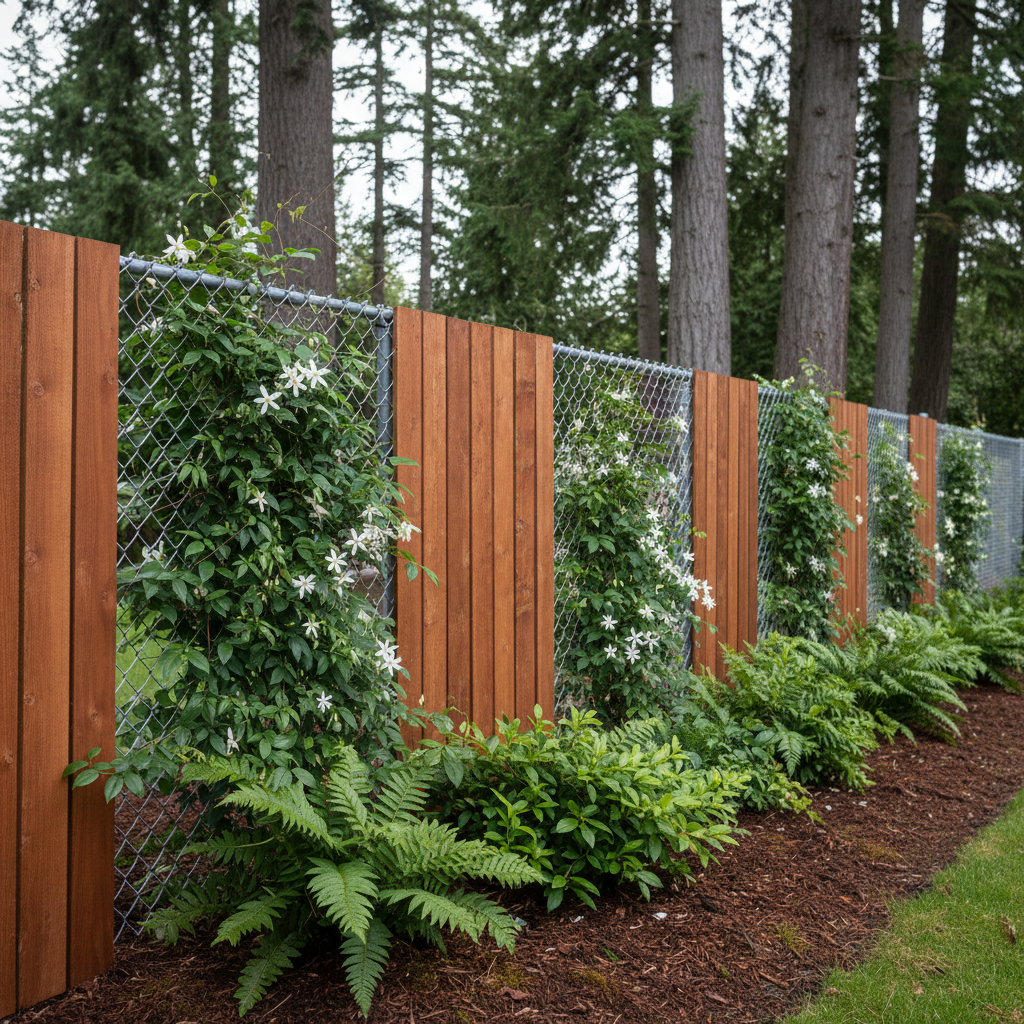
Chain Link Fence Privacy Slats: Essential Coastal-Proof Guide
Your chain-link fence does its job keeping the dogs in and marking property lines-but it sure doesn't keep your neighbors' eyes out. Or block the relentless Campbell River winds that turn your patio into a wind tunnel every evening. And if you're anywhere near the ocean on Vancouver Island, that metal is already showing those telltale rust spots after just two winters.
Privacy screening slats promise to solve these problems, but here's what the big-box stores won't tell you: most slat systems fail spectacularly in our coastal climate. We've pulled out hundreds of cracked, mildewed, wind-shredded privacy inserts from fences across the Comox Valley-slats that worked fine in Arizona but stood no chance against our salt air and nine months of rain.
You'll learn exactly which materials actually survive Island conditions, when to install them (timing matters more than you think), and how the right slat system can even reduce deer browsing along your fence line. Because after installing privacy solutions through dozens of storm seasons, we've figured out what lasts and what becomes expensive yard waste by November.
Why Privacy Slats Are Essential for Vancouver Island Properties
Living on Vancouver Island means dealing with weather that's tough on fences. You know what I'm talking about-the relentless salt air that corrodes everything, rain that never seems to quit, and winds that test every outdoor structure. Your chain link fence handles the job, but it doesn't exactly give you the privacy you need.
That's where privacy slats come in.
Island properties face challenges you won't find in mainland suburbs. The marine environment is harder on materials. Your neighbours might be close enough to hear your conversations. And let's not forget the deer wandering through at dawn, treating your garden like their personal buffet.
Here's what makes island fencing different:
- Salt spray accelerates corrosion on standard materials
- Consistent moisture creates mold and algae growth within months
- Strong coastal winds put stress on any fence covering
- Wildlife (especially deer) test fencing solutions constantly
- Ferry logistics complicate material delivery and replacement parts
The Coastal Climate Challenge: What Makes Island Fencing Different
Vancouver Island isn't Vancouver. The advice you'll find online? Most of it comes from dry, inland climates where materials last twice as long and weather damage looks completely different.
Your fence faces salt air every single day. That's why you can't just grab any solution and expect it to work. Materials that thrive in Kelowna start deteriorating within a season here in Campbell River or the Comox Valley.
The marine environment demands screening solutions built for moisture, corrosion, and wind. Standard products won't cut it. You need materials specifically designed to handle what the Pacific throws at them-and there are options that actually perform.
Privacy, Wind Protection, and Wildlife Control Combined
Privacy screening solves multiple problems at once, which is exactly what you need when you're managing an island property.
First, they block sightlines. Your backyard becomes your space again-no more waving awkwardly at neighbours every time you step outside. But they also reduce wind penetration, creating a calmer microclimate in your yard. That matters when you're trying to grow anything or simply want to enjoy your deck without getting blasted.
Here's the bonus: visual barriers work surprisingly well against deer and browsing animals. Deer don't like approaching areas where they can't see through. They want escape routes mapped before they commit. Solid screening changes their behaviour.
What Are Privacy Slats and How Do They Work?
These are rigid strips that thread through the mesh of your existing fence to create a solid visual barrier. They snap or weave into place vertically, converting your see-through fence into an opaque screen that blocks views from both sides while maintaining the structural integrity of your original fence framework.
The concept is straightforward. Your fence has diamond-shaped openings. Slats fill those openings. You end up with privacy without tearing out and replacing your entire fence-which saves money and time.
Installation doesn't require specialized tools or expertise. Most homeowners handle it themselves over a weekend. You're basically weaving or sliding strips through the mesh pattern, securing them as you go. The strips lock into the fence structure, creating a panel effect.
Types of Privacy Slats: Vertical vs. Privacy Weave
You've got two main styles: vertical slats and woven strips.
Vertical versions slide through the mesh from top to bottom. They're faster to install and create clean, uniform lines. Wind resistance? Excellent. The vertical orientation means less surface area catching gusts, which matters significantly in exposed coastal locations.
Privacy weave uses narrower strips threaded horizontally and vertically, basket-weave style. The result looks more decorative, almost fabric-like. But here's the reality for Campbell River and Comox Valley properties: weave patterns catch wind like a sail. That creates stress on your fence posts and framework.
For wind-prone areas, vertical wins. The performance difference becomes obvious during winter storms.
Material Options: Vinyl, Aluminum, and Wood Privacy Strips
Material choice determines how long your enhancement lasts in coastal conditions.
Vinyl dominates the market for good reason. It doesn't rust, resists salt air corrosion, and cleans easily. Quality vinyl products won't fade quickly-though cheaper versions absolutely will. Look for UV-stabilized formulations rated for marine environments. You'll pay more upfront but avoid replacing them every three years.
Aluminum sounds great in theory. It's lightweight and rust-resistant. But salt air still corrodes aluminum over time, creating white oxidation that looks terrible. Unless you're committed to regular maintenance and protective coatings, skip aluminum for island installations.
Wood strips? Beautiful initially. Practical long-term? Not really. The constant moisture here means they'll warp, rot, or require yearly treatments just to stay presentable. Cedar lasts longer than other woods, but you're still fighting a losing battle against the climate.
Bottom line: invest in quality vinyl formulated for coastal exposure. Your fence will thank you.
How to Install Privacy Slats: Coastal-Climate Tips
Installing these systems isn't complicated, but doing it right the first time saves headaches later. The process itself takes more patience than skill, especially if you're covering a long run of fencing.
Start by measuring your fence height and total linear footage. You'll need that to calculate material quantities. Most slats come in standard 4-foot, 5-foot, or 6-foot heights to match common fence sizes. Order 10% extra-you'll inevitably have bent pieces or measurement surprises.
Check your fence condition first. Loose posts, sagging sections, or damaged mesh need fixing before you add slats. Privacy screening adds weight and wind resistance. A fence that's already compromised won't handle the extra load, especially during storms.
Here's your tool checklist:
- Tape measure
- Work gloves (those metal edges get sharp)
- Zip ties or metal clips (for securing loose ends)
- Ladder if your fence exceeds 5 feet
- Helper (makes threading go twice as fast)
DIY Installation: Step-by-Step Guide
- Start at a corner post or gate. This gives you a clean reference point and prevents weird gaps at the end.
- Take your first slat and thread it through the diamonds, working from top to bottom. The slat should lock into the mesh pattern naturally-don't force it.
- Push each slat tight against the previous one. Gaps let wind through and defeat the purpose. You want them snug but not so tight they buckle.
- Every 10-15 feet, step back and check your line. They should run perfectly vertical. Slight angles compound over distance, creating noticeable waviness.
- At corners, you'll need to adjust your pattern slightly. Overlap slats or use corner caps if your product includes them.
- Secure loose top edges with clips. Wind catches those first.
Pro tip for coastal areas: install during dry weather. Wet slats are slippery, and moisture trapped during installation promotes mold growth between the slats and mesh.
Can I Install Privacy Slats Myself or Should I Hire a Professional for Wind-Prone Areas?
DIY works fine for most homeowners if you're patient and reasonably handy. You'll spend $200-400 on materials for a typical residential fence, plus a weekend of your time. The physical work isn't demanding-just repetitive.
But exposed properties with serious wind challenges? Consider professional installation. They'll reinforce weak points in your existing fence, properly tension the mesh, and ensure slats are secured against blow-out. That costs $8-15 per linear foot depending on fence height and complexity.
The decision point: if your fence regularly deals with sustained winds above 40 mph or you've had previous fence damage, invest in pro installation. For typical residential yards with moderate wind exposure, tackle it yourself and redirect those savings toward other landscape improvements.
How Privacy Slats Perform in Vancouver Island's Marine Environment
Let's talk real-world performance, because what works in Arizona doesn't necessarily survive here. The marine environment tests every material constantly. Salt particles carried by ocean winds settle on surfaces. Moisture condenses nightly. UV rays bounce off water, intensifying exposure.
Quality vinyl specifically engineered for coastal conditions typically lasts 10-15 years before showing serious degradation. That's assuming proper installation and basic maintenance. Cheap vinyl starts fading and becoming brittle within 18-24 months-false economy at its finest.
Salt air corrosion testing shows vinyl outperforms every alternative for screening applications. It doesn't oxidize like aluminum, doesn't rust like steel components, and doesn't absorb moisture like wood products. The material remains dimensionally stable through freeze-thaw cycles that wreck other options.
A Campbell River resident I spoke with installed commercial-grade vinyl seven years ago. His fence faces full western exposure-constant afternoon wind, direct spray from storms. The slats show minor discoloration but zero structural damage. He power-washes them annually. That's it.
How Do Privacy Slats Hold Up Against Vancouver Island's Heavy Rain and Salt Air?
Rain itself doesn't damage properly installed vinyl screening-the material sheds water readily.
The real concern? What grows on them.
Mold, mildew, and algae thrive in our damp climate, colonizing any surface given enough time. Dark-coloured slats show this less than light colours, but the growth happens regardless. You'll need to clean your privacy strips once or twice yearly to prevent buildup that becomes permanent staining.
Salt air creates a different challenge. Airborne salt particles accumulate on surfaces and trap moisture. This accelerates any corrosion potential in metal components-fasteners, fence framework, gate hardware. The material itself resists salt damage, but ensure every metal attachment point gets inspected annually. Rust spreads fast here.
Wind Resistance and Structural Integrity: Will Slats Affect Fence Longevity?
Yes, privacy strips definitely increase wind loading. You're converting a mesh fence that lets wind pass through into a solid panel that catches every gust.
Physics matters.
A standard 6-foot fence without slats experiences roughly 15-20 pounds per square foot of wind pressure during typical coastal storms. Add solid slats and that jumps to 40-50 pounds per square foot-the same as a solid wood fence panel.
Your fence posts and framework need to handle this increased force. Properly installed residential fencing with posts set in concrete and adequate tension typically manages fine. But old fences with loose posts or shallow footings? They'll fail. That's why structural assessment before upgrades saves you from post-storm disasters.
Vertical orientation helps significantly. Because individual pieces can flex slightly within the mesh, they dissipate wind energy better than a completely rigid panel. Weave-style installations create more continuous surfaces that catch wind like sails-I've seen entire sections peel away during winter storms.
What's the Best Time of Year to Install Privacy Slats on Vancouver Island?
Timing matters more than you'd think. Sure, you can technically install them any month, but choosing the right window makes the job easier and improves long-term performance.
Late spring through early fall offers ideal conditions. You want dry weather for installation, minimal wind during the process, and enough warm days afterward for materials to settle into place before winter testing begins. April through September typically delivers this combination-though summer drought means you're not fighting mud around fence lines.
Avoid winter installations unless absolutely necessary. November through February brings our heaviest storms. Freshly installed screening hasn't had time to lock into position or for you to identify weak spots needing reinforcement. First major windstorm? You might be picking up scattered pieces from your yard.
Early spring installations work but require patience. March weather bounces between beautiful and miserable daily. You'll likely start your project three times before finishing it.
Avoiding Winter Storm Season: Installation Timing Strategy
Here's your month-by-month reality check:
April-May: Excellent installation window. Weather stabilizes, storms decrease. Fence work dries quickly between rain. Materials are readily available.
June-August: Best conditions. Dry weather, maximum daylight, comfortable temperatures. Downside? Everyone else is doing outdoor projects too. Expect longer lead times if hiring professionals.
September-October: Good window before storms ramp up. Materials have time to weather-in before winter. Just watch weather forecasts closely-early storms occasionally roll through.
November-March: Avoid if possible. If you must install during winter, choose a high-pressure system window (clear, calm weather) and plan to inspect and reinforce after the first storm.
Ferry Logistics and Material Availability for Island Residents
Living on Quadra, Cortes, or one of the smaller Discovery Islands adds complexity. You're dependent on ferry schedules for material delivery, and that affects both timing and cost.
Order materials with delivery buffer time built in. Ferry delays happen. Weather cancellations happen. That shipment you expected Wednesday might arrive Friday-or next week. Starting your project assuming materials arrive "on time" sets you up for frustration.
Consider material storage too. If you're ordering supplies for 200 linear feet of fence, that's a significant volume. You'll need covered, dry storage until installation. Leaving materials sitting uncovered in weather before installation compromises their condition.
Some suppliers on the mainland won't ship to smaller islands at all. You'll need to arrange pick-up in Campbell River or Courtenay and transport via ferry yourself. Factor those logistics into your project timeline and budget.
Maintenance Requirements for Privacy Slats in Wet Coastal Climates
Screening doesn't qualify as "install and forget" when you live in a marine environment. The climate ensures growth-organic growth you'll need to remove regularly to prevent permanent damage.
Annual deep cleaning ranks as essential maintenance. Power washing on low pressure (1200-1500 PSI) removes accumulated algae, mold, and salt deposits effectively. Higher pressures risk damaging vinyl or forcing water between slats and fence mesh, creating trapped moisture pockets.
Between annual deep cleans, spot-treat visible growth. Mix basic dish soap with water, apply with a soft brush, rinse thoroughly. Caught early, organic growth wipes away easily. Left for months, it penetrates material surfaces and stains permanently.
Check fasteners and attachment points every spring. Salt air corrodes metal clips, zip ties degrade from UV exposure, and winter storms loosen connections. Tighten or replace as needed. Catching these small issues prevents slats from tearing loose during the next big blow.
Your maintenance schedule should look like this:
- Monthly: Visual inspection for loose sections or damage
- Quarterly: Light cleaning of visible algae or dirt buildup
- Annually: Complete power wash and fastener inspection
- Every 2-3 years: Touch-up or replacement of degraded sections
What Maintenance Do Privacy Slats Need in Wet, Coastal Environments?
Beyond regular cleaning, watch for UV damage and material degradation. Quality vinyl resists fading, but no material is completely immune. After 5-7 years, you'll notice colour shifts-especially on south-facing sections receiving maximum sun exposure.
Discoloration itself doesn't compromise function. Your fence still blocks views and wind. But if appearance matters, plan for eventual replacement of the most exposed sections.
Mold prevention products formulated for outdoor use extend time between cleanings. Apply after your annual power wash while surfaces are clean. These treatments typically last 6-12 months before reapplication becomes necessary. They're worth the modest investment if you're tired of constant scrubbing.
How Long Do Privacy Slats Last in Marine Climates?
Realistic lifespan expectations depend entirely on material quality and maintenance consistency.
Premium vinyl with marine-grade UV inhibitors and proper care? 12-15 years before replacement becomes necessary due to brittleness or cracking. Mid-grade vinyl products? 7-10 years. Budget vinyl that wasn't engineered for coastal exposure? 3-5 years if you're lucky.
Aluminum develops surface corrosion within 2-3 years. Functionally it still works, but aesthetically it looks progressively worse. Protective coatings extend life but require reapplication every couple years.
Wood strips, even pressure-treated or cedar? 5-7 years maximum before rot, warping, or splitting forces replacement. The constant moisture here doesn't give wood any breaks.
For the best return on investment in Campbell River, Comox Valley, or island properties, buy quality vinyl once rather than replacing cheap alternatives repeatedly.
Privacy Slats as a Deer Deterrent Solution for Vancouver Island Properties
Deer are smart, cautious animals. They rely heavily on vision to assess threats and plan escape routes. When they can't see through an area, they hesitate-and hesitation often means they choose an easier path.
That's where screening delivers unexpected value beyond blocking nosy neighbours.
A solid visual barrier removes the "safety assessment" deer make before entering your yard. They can't see through to identify threats or escape routes. That uncertainty makes your property less appealing compared to open spaces where they maintain 360-degree awareness.
I'm not suggesting slats alone will keep every deer out. A motivated, hungry deer will jump a six-foot fence if your garden looks irresistible enough. But combined with other deterrents, screening creates a layered defense that genuinely reduces browsing pressure.
The effectiveness depends on several factors:
- Fence height (6 feet minimum for deterrent effect)
- Complete coverage without gaps deer can peer through
- Combination with motion-activated lighting or sound
- Scent deterrents applied around the perimeter
- Removing "deer candy" plants from the other side
Will Privacy Slats Work as a Deer Deterrent on My Property?
Honestly? They help, but they're not magic.
If you're dealing with light deer pressure-occasional visitors sampling your hostas-a solid fence might solve your problem completely. The visual barrier alone changes their behaviour enough to discourage casual browsing.
Heavy deer pressure from a resident population? You'll need a comprehensive approach. The screening creates your first defense layer by eliminating visual cues. Add strategic planting of deer-resistant species near the fence line, motion-activated deterrents, and possibly height extensions.
One Comox Valley property owner reported a 70-80% reduction in garden damage after installation. Did deer disappear completely? No. But they stopped treating the yard like a regular feeding station. That's realistic success.
Combining Privacy Screening with Other Deterrent Methods
Layered strategies work best against persistent wildlife.
Start with your solid visual barrier. That eliminates the "see-through" factor that makes properties feel safe to deer. Then add elements that target their other senses.
Motion-activated sprinklers startle deer during approach attempts. They learn quickly that your yard triggers unpleasant surprises. Solar-powered units work well for island properties where running electrical lines to fence perimeters isn't practical.
Scent deterrents like predator urine or commercial repellents create olfactory warnings. Rotate products every few weeks-deer adapt to consistent scents. Apply along the fence line on both sides if possible.
Cost Analysis: Privacy Slat Installation Options and Local Considerations
Let's break down real numbers, because "affordable" means nothing without context.
DIY materials for a typical 100-linear-foot residential fence run $300-800 depending on quality and height. That's just materials-slats, fasteners, corner pieces. Budget at the higher end if you're choosing marine-grade vinyl over basic products.
Professional installation adds $800-1,500 for that same 100-foot fence. You're paying for labour, expertise, and warranty coverage. Contractors also spot and fix underlying fence issues before adding screening-value that's hard to quantify until you avoid a winter blowout.
Here's what you're actually looking at cost-wise:
| Installation Type | Material Cost | Labour Cost | Total (100ft) | Warranty | |----------------------|------------------|-----------------|------------------|--------------| | DIY Basic Vinyl | $300-400 | $0 | $300-400 | None | | DIY Premium Vinyl | $600-800 | $0 | $600-800 | Material only | | Professional Basic | $300-400 | $800-1,200 | $1,100-1,600 | 1 year typical | | Professional Premium | $600-800 | $1,000-1,500 | $1,600-2,300 | 2-5 years |
What Is the Cheapest Way to Add Privacy in Coastal Climates?
Cheapest upfront? DIY with budget vinyl. You'll spend under $400 for 100 feet of basic coverage. It'll work. For a while.
Here's what "cheap" actually costs: replacements every 3-4 years when coastal exposure degrades inferior vinyl. The labour of reinstalling. The frustration of blown-out sections after storms. Add it up over 10 years, and cheap becomes expensive.
Smartest value? Buy quality vinyl once and install it properly (or hire someone who will). That $700 material investment lasting 12-15 years beats $350 replacements every three years. The math isn't complicated.
Other alternatives cost more and perform worse here. Hedges take years to mature and require constant maintenance. Wood panels rot in our climate. Synthetic screens without proper support systems become shredded flags in winter winds. For coastal durability and long-term value, vertical slats on existing fencing wins.
Local Building Codes and HOA Considerations for Campbell River and Comox Valley
Before you order materials, verify local regulations. Fence height restrictions vary by municipality and property location.
Campbell River typically permits 6-foot residential fencing without special permits in rear and side yards. Front yards face stricter limits-usually 3-4 feet maximum. Adding slats doesn't change the height restriction. Your fence must comply regardless of the screening you add.
Comox Valley regulations vary between Comox, Courtenay, and electoral areas. Some neighbourhoods prohibit solid fencing entirely in front yards due to sightline requirements. Others allow it with setback requirements. Check with your local planning department before purchasing materials-especially for corner lots with sightline triangles.
Stratas and homeowner associations add another complexity layer. Some have specific rules about fence appearance, colour, or materials. Get written approval before installation if you're governed by an HOA or strata council. Removing and replacing unapproved installations costs far more than a quick pre-approval email.
Common Mistakes to Avoid When Installing Privacy Inserts
Learning from others' mistakes beats repeating them yourself. Here's what goes wrong most often-and how to avoid it.
1. Ignoring existing fence condition. You can't build privacy on a failing foundation. Loose posts, sagging mesh, or corroded framework will fail when you add wind-loading from solid panels. Fix structural issues first.
2. Mixing manufacturers mid-project. Different products have slightly different dimensions. That quarter-inch difference creates visible gaps or overlaps that look terrible and let light through. Order all materials from the same product line.
3. Installing during wet weather. Moisture trapped between slats and mesh promotes mold growth from day one. Wait for dry conditions, even if it delays your project.
4. Insufficient attachment points. Budget vinyl often comes with minimal fasteners. Don't skip buying additional clips or ties. Every 12-18 inches along the top rail prevents slats from working loose.
5. Ignoring wind direction. If your property has prevailing wind from one direction, ensure that side gets reinforced first. Windward sections take maximum stress.
6. Cutting corners on UV protection. Saving $100 on non-UV-stabilized vinyl costs you replacement within 24 months. False economy.
7. Skipping the maintenance schedule. Organic growth isn't just ugly-it retains moisture that degrades materials faster.
Installation Errors That Lead to Wind Damage
Wind damage stems from a few specific mistakes, and they're entirely preventable.
Loose top edges catch wind first. They lift and peel, tearing out adjacent sections in a cascade failure. Use continuous top clips or metal channels designed for high-wind areas. The $30 investment prevents $300 in damage.
Inadequate post bracing compounds wind stress.
If posts flex significantly when you push them, they'll flex more under sustained wind loading. Add cross-bracing or concrete reinforcement before installing screening.
Do Privacy Slats Void My Fence Warranty?
Possibly, depending on your original fence warranty terms and what modifications you make.
Most warranties cover manufacturing defects and installation quality for 1-5 years. Adding slats typically doesn't void the fence warranty unless you damage the fence structure during installation-cutting mesh, removing tension bands, or altering post positions.
Read your warranty documentation before starting. Some manufacturers specifically address modifications. If you're hiring professional installation, verify they carry liability insurance covering warranty implications. Reputable contractors will.
The bigger concern isn't the warranty-it's structural damage. A poorly installed system that causes fence failure won't be covered by anyone's warranty. Do it right or hire experienced installers who understand coastal requirements.
Frequently Asked Questions About Privacy Enhancement
Can I install privacy slats on a fence with barbed wire?
Yes, but remove the barbed wire first. Working around it risks injury, and the wire compromises the visual barrier you're creating. Most properties don't need that security level anyway.
What colours work best for coastal environments?
Dark colours hide algae and mold discoloration better than light shades. Grey, brown, and forest green age more gracefully here than white or beige. That said, lighter colours stay cooler and fade less noticeably. Choose based on your aesthetic priorities and maintenance willingness.
Will privacy slats make my yard darker?
Some reduction in light penetration is inevitable-that's the point. But the effect isn't dramatic unless your fence is very close to windows or living spaces. Think of it like closing sheer curtains rather than blackout blinds. Most homeowners find the trade-off worthwhile for wind protection gained. Your plants along the fence line might get slightly less direct sun, but we're talking maybe 20-30% reduction depending on fence orientation. South-facing fences block more afternoon light than north-facing ones, obviously.
How much privacy do slats actually provide?
Near-complete visual blocking when properly installed with quality materials. You might see vague shadows or movement in bright backlighting, but no clear details. Basically, you can't identify people or read activities through properly installed screening.
Can I mix slat colours for decorative effect?
Technically yes, practically it's tricky. Different colours from different manufacturing batches can have slight dimensional variations that create gaps. If you want decorative variation, buy it as a designed product rather than mixing separate colours. Some manufacturers offer two-tone options specifically engineered to fit together properly. Going rogue with colour mixing usually looks amateur rather than artistic.
Do I need to remove slats for fence repairs?
Usually, yes. Accessing the fence framework for repairs requires removing screening in that section. Quality pieces can be removed and reinstalled without damage if you're careful. Another reason to invest in durability-cheap slats break during removal and need replacement. Keep extras on hand for situations like this. A box of spare slats sitting in the garage beats ordering replacements and waiting for delivery when you need to fix something urgently.
Ready to transform your fence into a private, wind-resistant barrier that handles Vancouver Island's coastal climate? Whether you're tackling this as a DIY weekend project or prefer professional installation, choosing the right materials and timing makes all the difference. Need help assessing your fence condition or want expert installation that comes with a warranty? Request a free quote and let's discuss a solution that fits your property.
Protect Your Coastal Investment with the Right Privacy Solution
Fencing in coastal environments demands more than standard solutions-it requires materials engineered to withstand relentless salt spray, humidity, and wind. The right privacy inserts transform vulnerable barriers into durable coastal shields that maintain their appearance and functionality for years. By selecting corrosion-resistant materials, implementing proper drainage, and following region-specific installation techniques, you're not just adding privacy-you're making a smart long-term investment in your property's value and comfort.
Start by assessing your fence's current condition and measuring your exact requirements. The most effective coastal solutions begin with proper planning and quality materials designed specifically for marine environments.
Ready to upgrade your coastal property with professional fence and gate installation? Dream Team Landscaping brings coastal expertise and premium materials to every project, ensuring your investment stands strong against Vancouver Island weather.
READY TO TRANSFORM YOUR GARDEN?
Relates Articles
Real landscaping advice from our team—seasonal tips, project ideas, and maintenance wisdom earned over 30 years on Vancouver Island.