


Smart Irrigation for Campbell River & Comox Valley Yards: Water Restrictions, Slopes, and No-Waste Scheduling
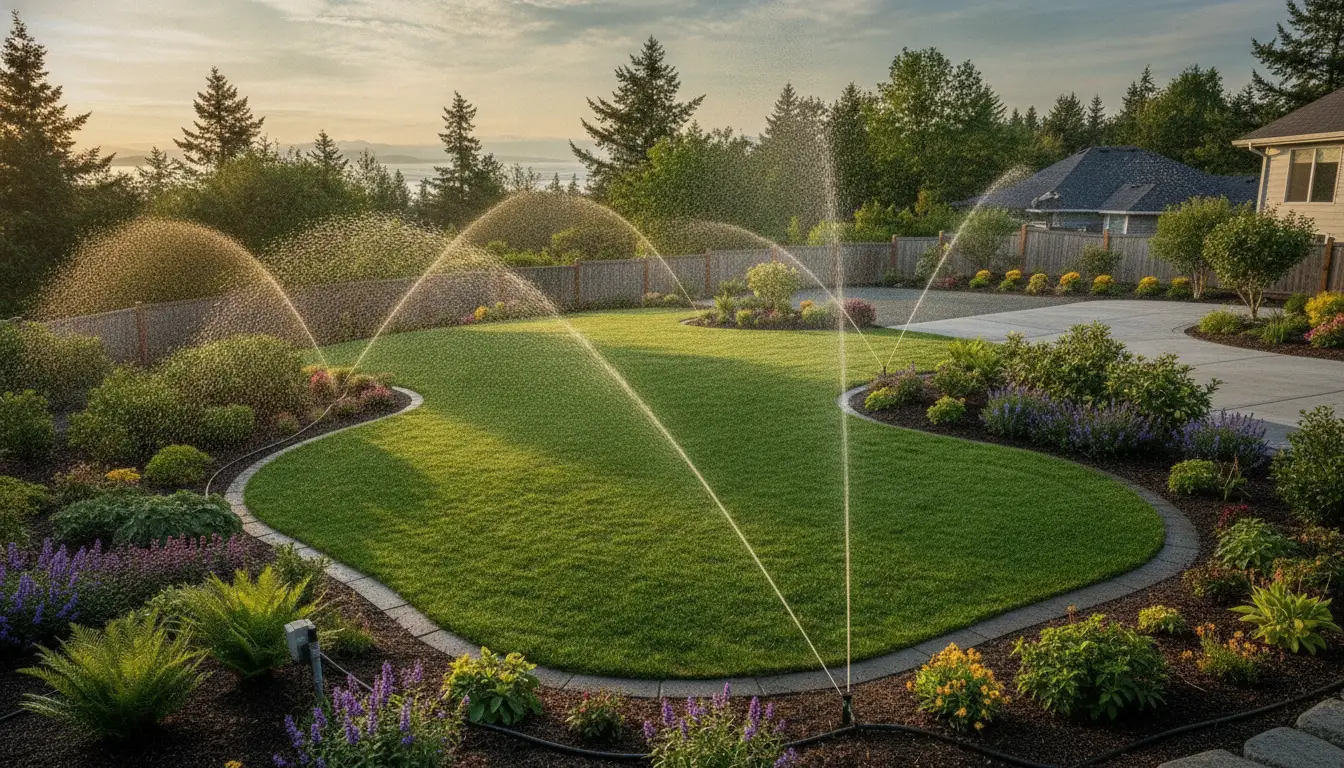
A good irrigation setup should make summer yard care easier, not send water down the driveway or run at the wrong time during restrictions.
That matters in Campbell River and the Comox Valley because our yards deal with a strange mix: wet winters, dry summer stretches, slopes, shallow soil in places, and homeowners who still want lawns and garden beds to look cared for. A smart system helps, but only if it is planned around the property instead of copied from a flat suburban template.
Dream Team Landscaping is not the bargain option. That is intentional. Irrigation planning is one of those jobs where a cheap shortcut can show up later as brown patches, soggy beds, wasted water, or a system that does not match local rules.
If you are comparing irrigation systems Campbell River homeowners can rely on, start with three questions: where is water actually needed, when is watering allowed, and what happens to runoff on your lot?
Start with local watering rules before choosing hardware
Campbell River’s lawn watering regulations run from May 1 to September 30. Under Stage One, the City allows residential watering from 5 to 9 a.m. and 7 to 10 p.m. on assigned days by address. Stage Two cuts watering down to one assigned day per week, and Stage Three prohibits residential and non-residential lawn watering.
That is not a small detail. A controller that cannot be programmed around those windows is the wrong controller for a Campbell River yard.
The Comox Valley has the same bigger issue: summer outdoor water use is the pressure point. The Comox Valley Regional District says daily water use almost triples in summer because of outdoor watering, and its water system users used more than 9.8 billion litres in 2024.
A proper irrigation quote should account for local restrictions from the start. That means:
- Controller programming by address and restriction stage
- Zones separated by plant need, sun exposure, and soil
- Sprinkler heads placed so water reaches lawn and beds, not pavement
- Rain sensor or weather-based shutoff
- A spring start-up and leak check before regular watering begins
For larger installs tied to new planting, grading, beds, or outdoor living work, connect irrigation planning with landscape design and installation instead of treating it as an afterthought.
Slopes and coastal soils change the watering plan
A flat lawn in town does not water like a sloped property above the ocean, a rural Comox Valley lot, or a yard with thin soil over rock.
On a slope, too much water at once runs off before roots can use it. In a low spot, the same run time can leave soil wet long after the zone shuts off. That is how homeowners end up with one dry corner and one mossy, soft section even though the system “works.”
Smart irrigation on Vancouver Island often needs shorter cycles with soak time between them. For example, a sloped lawn may do better with two shorter morning cycles than one longer run that sends water toward the sidewalk. Garden beds with mulch may need drip lines, while exposed lawn may need spray or rotor coverage.
This is where a site visit earns its keep. A crew should look at:
- Slope direction and runoff paths
- Soil depth and compaction
- Sun and wind exposure
- Existing drainage problems
- Lawn areas versus planting beds
- Driveways, paths, patios, fences, and concrete edges
If a quote skips those details, it is probably not a quote. It is a guess.
Smart controllers help, but layout still matters
A smart controller can adjust watering based on weather, season, and programmed schedules. That is useful. It is not a fix for bad zone design.
The City of Campbell River recommends timers, rain sensors, leak checks, proper sprinkler distribution, and watering only green areas instead of sidewalks or driveways. Those basics matter more than any app. A smart controller attached to poor head placement will still waste water.
For Campbell River and Comox Valley yards, the best setup usually starts with zones such as:
- Sunny lawn areas
- Shaded lawn areas
- New planting beds
- Established shrub beds
- Sloped sections
- Containers or high-heat areas near walls and concrete
That separation lets the system water each area based on need. A shaded lawn should not run as long as a south-facing strip beside a driveway. A mulched bed should not be treated like turf.
Homeowners who already use landscape maintenance can also tie irrigation checks into regular care. That is often how small problems get caught before they become repair bills.
What a clear irrigation quote should include
Irrigation pricing depends on access, trenching, water source, zones, controller type, soil, existing hardscape, and whether the work is tied to new planting. A proper quote should spell that out.
At minimum, expect the scope to name:
- Number of zones
- Controller type and sensor details
- Sprinkler or drip layout
- Valve locations
- Trenching and restoration plan
- Any tie-ins with planting, lawn repair, or grading
- What is included in start-up, testing, and walkthrough
- What is excluded, such as plumbing changes or electrical work if those need a licensed trade
This is where Dream Team’s no-surprise approach matters. Fair pricing pays trained people to do careful work, use quality materials, and explain what is included before the job starts.
If the system is part of a wider yard upgrade, start with the Campbell River landscaping team or Comox Valley landscaping services so irrigation, planting, drainage, and maintenance are planned together.
When to call a landscaper, and when to bring in a specialist
A landscaper is the right first call when irrigation is connected to beds, lawn health, slopes, drainage, new planting, or a full yard plan. That is where water use affects the whole property.
An irrigation or plumbing specialist may need to be involved when the work requires backflow devices, major water-line changes, pump systems, or technical repairs beyond normal yard installation. The honest answer is better than pretending one crew should do everything.
For many homeowners, the best result comes from a clear division: Dream Team plans the yard, grading, planting, and maintenance needs, then coordinates or scopes any specialty work that should be handled by the right trade.
FAQ
Is smart irrigation worth it in Campbell River?
Yes, if the system is planned around local restrictions, slopes, soil, and actual plant needs. A smart controller is most useful when the zones are designed properly first.
Can I water newly seeded or sodded lawn during restrictions?
Campbell River issues temporary watering permits for newly seeded and sodded lawns during Stage One only. The City lists 45 days for seed and 21 days for sod, within allowed time windows.
Should irrigation be installed before or after planting?
It should be planned before planting. Lines, zones, and coverage are easier to set while beds, lawn areas, and grading are still being built.
Ready to plan irrigation that fits your yard?
If you want irrigation installation in Campbell River or the Comox Valley, start with a site visit and a detailed quote. Dream Team will look at your yard, explain the scope, and price the work clearly so you know what you are paying for.
You can also read the existing guide to irrigation installation on Vancouver Island if you want more background before booking.
READY TO TRANSFORM YOUR GARDEN?
Relates Articles
Real landscaping advice from our team—seasonal tips, project ideas, and maintenance wisdom earned over 30 years on Vancouver Island.