


Rock Garden Ideas for Low-Maintenance Vancouver Island Yards
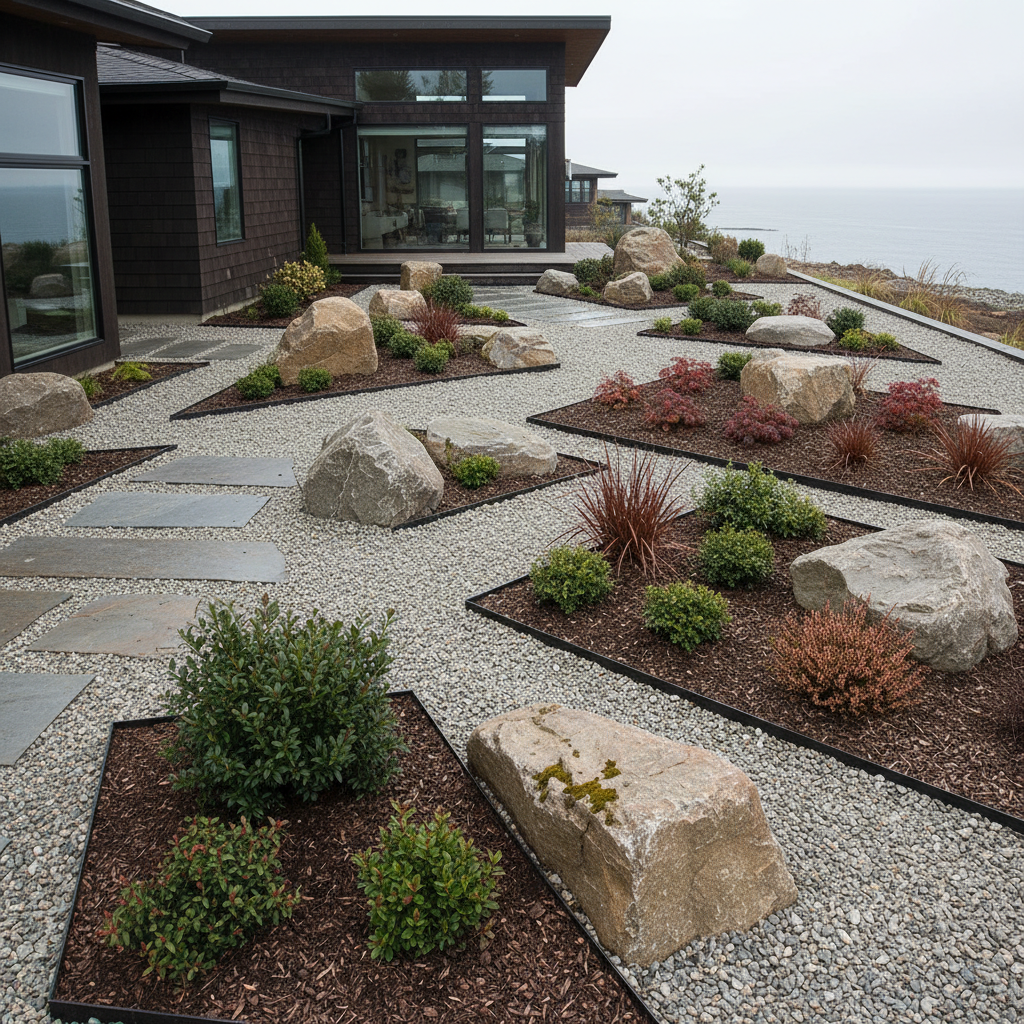
Rock and gravel yards can look clean,practical, and well built. They can also fail fast if someone spreads cheap gravel over weeds and calls the job done.
On Vancouver Island, the difference comesdown to base prep. Campbell River and Comox Valley yards deal with wet winters,moss pressure, compacted soil, and summer dry spells. Rock can reduce mowingand watering, but it still needs drainage, edging, proper fabric choices, and planting that suits the site.
This guide walks through buildable rockgarden ideas for local home owners who want less weekly yard work without ending up with a dusty parking-lot look. If you are planning a larger yard upgrade,Dream Team Landscaping can help with landscape installation and maintenance services, design planning, grading, rock placement, planting,and a clear project quote.
Why rockand gravel work well in Campbell River and Comox Valley
Rock surfaces make sense here because they handle foot traffic,reduce lawn area, and fit properties where soil stays too wet for healthy turf.They are not maintenance-free, but they are often lower-maintenance than lawn,especially on slopes, side yards, and narrow strips beside driveways.
Environment and Climate Change Canada’s climate normals program uses 1991–2020 station data to track precipitation, temperatures, and other site-planning conditions across Canada. That matters because hardscape planning should respond to local rain patterns, not just style photos. On many Vancouver Island properties, water movement is the first design question.
A good rock area should answer three practical questions:
· Where does winter rain go?
· How will weeds be blocked without trapping water?
· What plants will survive both wet months and dry spells?
Rock and gravel are best used where they solve a problem. A gravel path can keep shoes out of mud. River rock can slow water along a swale. A rock garden bed can reduce watering in a hot front yard. Decorative stone can defineedges around patios, fences, and planting beds.
The mistake is treating stone as a cover-up. If weeds, drainage, orsoil grade are poor before the rock goes in, the new surface will show thoseproblems within one season.
Riverrock landscaping for wet areas and drainage edges
River rock works well in visible areas where water already moves. Ithas rounded edges, a clean look, and enough weight to stay put better thanlight mulch during heavy rain.
Use river rock for:
· Dry creek beds that carry roofor slope runoff
· Edges beside driveways wheremulch washes out
· Drainage swales with plantsalong the upper edge
· Accent bands beside patios andwalkways
· Low spots where bark mulchstays soggy
The rock size matters. Small pebbles can shift and collect leaves.Larger 2–4 inch river rock is more stable in channels, but it is harder to walkon and more expensive to place by hand. For a front-yard accent strip, smallerrock may be fine. For a drainage route, use heavier stone and a proper base.
A dry creek bed should not just be a line of rocks. It usually needsexcavation, landscape fabric suited to drainage, a compacted base where needed,and a clear outlet. Water must move somewhere safe, not into a neighbour’sproperty, against a foundation, or onto a sidewalk.
For homeowners comparing ideas, the landscaping project gallery is a useful way tothink about shape, edging, and how rock areas connect to planting and lawn.
Gravellandscaping for paths, side yards, and utility zones
Gravel is one of the most practical materials for Vancouver Islandside yards. It drains better than poured surfaces, costs less than manyhardscape options, and can make narrow work areas easier to use.
Good places for gravel include:
· Side-yard access to a shed orback gate
· Utility areas around garbagebins or heat pumps
· Informal garden paths
· Seating pads away from the mainpatio
· Transitions between lawn andplanting beds
A path needs more than loose gravel on soil. For steady footing, thetypical sequence is excavation, geotextile or weed barrier where suitable,compacted base material, edging, and the finish gravel. Edging is not optionalon most sites. Without it, gravel migrates into lawn, beds, and drains.
For walking surfaces, crushed gravel with angular edges lockstogether better than round pea gravel. Pea gravel looks soft, but it shiftsunderfoot and can feel unstable on slopes or near steps. If the goal is aclean, walkable path, angular material is usually the better choice.
Drainage still matters. A gravel path beside the house should slopeaway from the foundation. A path across a wet lawn may need a deeper base, adrain line, or grading work before the finish layer goes down. If the path isexpected to handle wheelbarrows or frequent traffic, that should be included inthe quote from the start.
Rockgarden beds with drought-tolerant planting
Rock garden beds work best when the planting plan is kept simple.The goal is not to fill every gap. It is to create structure with stone, thenadd plants that can handle the site.
For sunny, drier areas, consider combinations like ornamentalgrasses, lavender, sedum, creeping thyme, kinnickinnick, and compact nativeshrubs. For part shade, sword fern, salal, Oregon grape, and evergreenhuckleberry can work well when soil and light are right.
The BC Native Plant Society and municipal native-plant guides bothpoint homeowners toward plants that fit local ecosystems rather than thirstyannual displays. That does not mean every yard must be fully native. Apractical design can mix native plants with durable ornamentals, as long aswater needs, mature size, and maintenance expectations are clear.
Rock beds need soil pockets. Plants do not thrive in a thin sprinkleof soil between stones. A professional install usually includes amendedplanting zones, correct spacing, and mulch or smaller stone around root zones.Large decorative rock can hold heat in full sun, so plant choice and irrigationduring establishment matter.
For most new planting, expect the first year to require morewatering and weeding than later years. Once roots settle in, the bed becomeseasier to manage.
Weedbarrier, fabric, and base prep: where shortcuts show up
The common shortcut is simple: mow the weeds low, roll fabric overthe top, dump gravel, and leave. It looks tidy for a few weeks. Then weeds growthrough weak seams, organic debris collects on top, and the surface starts tosink.
Better prep starts with removal. Existing weeds and sod should bestripped or controlled before fabric goes down. Soil should be graded. Lowspots should be corrected. Edges should be set. If the area carries water, thebase and fabric must allow that water to move.
Not all fabric is right for every job. Some weed barriers block toomuch water and create perched moisture. Others break down quickly under foottraffic or exposed stone. On a drainage area, geotextile selection matters. Ona decorative bed, the fabric should be protected from sunlight and pinnedproperly.
A clean installation usually includes:
1. Site assessment and grade check
2. Removal of sod, weeds, roots,and debris
3. Drainage corrections whereneeded
4. Fabric or geotextile suited tothe purpose
5. Edging or border installation
6. Base compaction for paths orseating areas
7. Finish rock, gravel, andplanting
This is where a contractor’s quote should be specific. Ask what isbeing removed, how deep the base will be, what fabric is being used, and howdrainage will be handled. Dream Team’s landscapedesign and installation serviceis built around that kind of scope clarity.
Slopeconsiderations for rock and gravel yards
Rock can help on slopes, but it can also slide, wash out, or exposefabric if the slope is too steep. The steeper the grade, the more the projectdepends on containment.
On mild slopes, larger angular rock, planted pockets, and solidedging may be enough. On stronger slopes, consider terracing, boulderplacement, timber or block borders, drainage channels, or planted groundcoversthat hold soil. A slope beside a driveway may need a different approach than agarden slope at the back fence.
Water speed is the issue. Rain running across bare gravel can cutchannels through the surface. Once that happens, the repair is not just rakingstone back into place. The path of water needs to be corrected.
For Comox Valley and Campbell River properties, this is especiallyrelevant after long wet periods. A slope that looks stable in July may behavedifferently during a November storm. Build for the wet month, not the photomonth.
Maintenanceexpectations after installation
Rock and gravel reduce mowing, watering, and bed cleanup, but theystill need care. Leaves, needles, seed heads, and soil dust collect on top. Iforganic matter sits there, weeds can germinate above the fabric.
Plan for:
· Leaf blowing or raking in fall
· Pulling young weeds beforeroots spread
· Replenishing gravel inhigh-traffic areas
· Checking edging afterfreeze-thaw cycles or heavy rain
· Clearing drains and rockchannels before storm season
· Pruning nearby shrubs so debrisdoes not build up
A well-built rock area may need light upkeep a few times a yearrather than weekly work. That is the real benefit. It is lower maintenance, notno maintenance.
If you want the yard to stay tidy without taking on every seasonaltask yourself, ask about ongoing landscaping services or seasonal cleanupsupport.
Costfactors for rock and gravel landscaping
Pricing depends on access, material choice, excavation depth,haul-away, edging, drainage, planting, and whether machinery can reach the workarea. A small gravel side path is a different project than a full front-yardrock garden with grading and irrigation adjustments.
The biggest cost drivers are usually:
· Removing sod, roots, oldfabric, or failed gravel
· Correcting drainage before thefinish material goes in
· Using heavier stone thatrequires more labour
· Building stable edging orborders
· Adding plants, boulders, orlighting
· Working in tight side yardswith limited access
The cheapest quote may skip the work you cannot see. That can costmore later if weeds return, water pools, or the gravel needs to be rebuilt.
A clear quote should name the materials, base depth, disposal needs,and scope limits. That is how homeowners avoid surprise add-ons.
Ready toplan a lower-maintenance yard?
Rock garden ideas are only useful when they fit the property. A goodplan accounts for rain, slope, traffic, maintenance, and the way you actuallyuse the yard.
Dream Team Landscaping can help design and install rock beds, gravelpaths, river rock drainage features, planting areas, and completelow-maintenance yard upgrades for Vancouver Island properties. Request a freeestimateto book a site visit and get a detailed quote.
FAQ
Are rock gardenstruly low-maintenance?
They arelower-maintenance when built properly. You still need seasonal leaf cleanup,light weeding, and occasional gravel refreshes. The main savings come from lessmowing, less watering, and fewer soft bed repairs.
Is river rock good for drainage?
River rock can help protectdrainage routes from erosion, but it does not create drainage by itself. Thegrade, base, fabric, and outlet matter more than the stone on top.
What gravel is best for paths?
Angular crushed gravel isusually better for walking because it locks together. Pea gravel looks neat butshifts more underfoot, especially on slopes.
Can I put gravelstraight over weeds?
It is not a good idea.Weeds and organic material should be removed first. Otherwise the gravelsettles unevenly and weeds often return through seams or debris on top.
What plants workwith rock gardens on Vancouver Island?
Good choices dependon light and soil. Common options include ornamental grasses, sedum, lavender,kinnickinnick, salal, sword fern, Oregon grape, and evergreen huckleberry.
Related Dream TeamResources
· ongoing landscaping services
· landscaping project gallery
· landscapedesign and installation service
· Request a free estimate
READY TO TRANSFORM YOUR GARDEN?
Relates Articles
Real landscaping advice from our team—seasonal tips, project ideas, and maintenance wisdom earned over 30 years on Vancouver Island.