


Keyhole Garden Beds: The Space-Saving Design
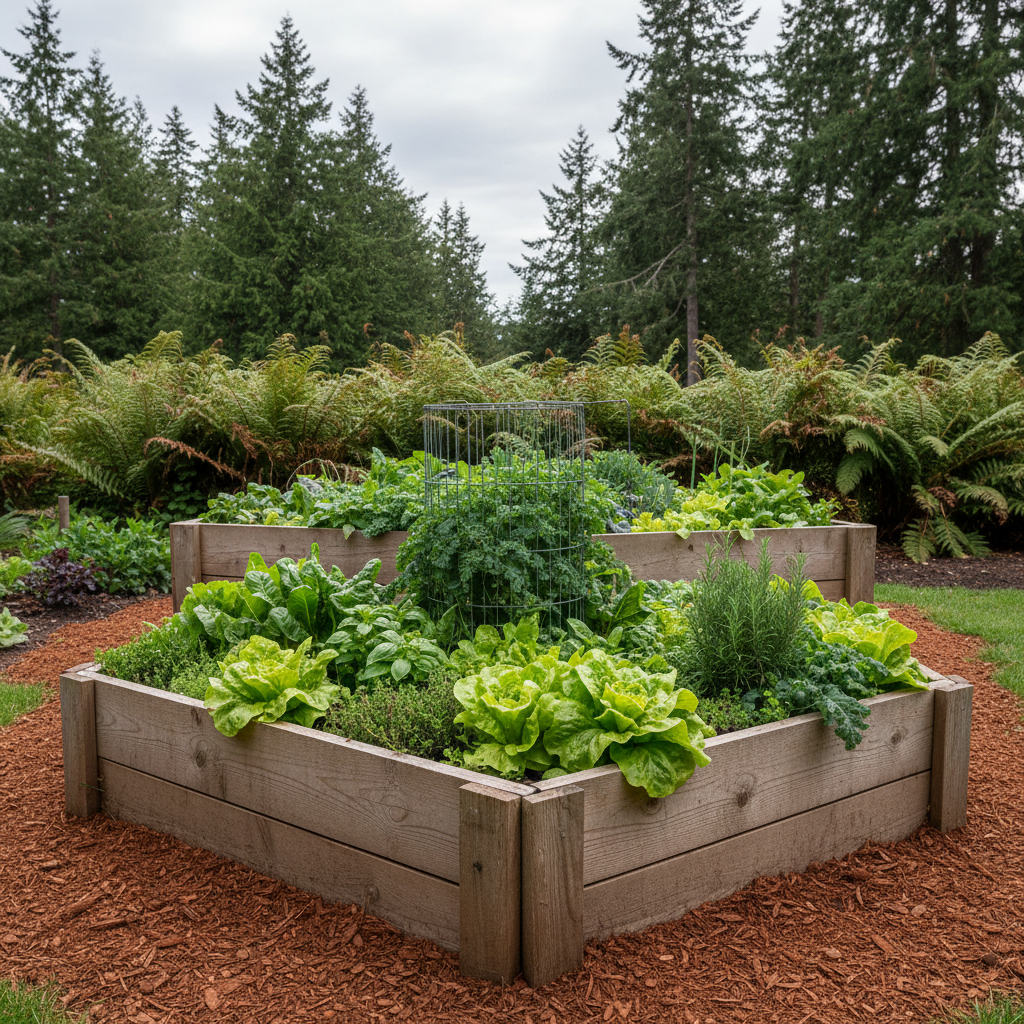
Keyhole Garden Beds: The Space-Saving Design
If your raised beds are soaked by March, your clay soil stays cold well into summer, and deer keep eating half your harvest, you are not doing anything wrong. You are gardening in a Vancouver Island / coastal PNW climate, and traditional raised beds were not designed for it. Most raised bed designs come from drier, warmer regions where drainage, soil warmth, and wildlife pressure are not constant problems.
This system is adapted from an ancient African growing method and modified for our wet, cool conditions. It solves three major issues at once:
- Excess rain drainage: The raised, circular structure sheds winter water instead of trapping it
- Faster soil warming: Central composting generates heat, helping soil warm earlier in spring
- Reduced deer pressure: The compact shape and access path make casual browsing less likely
You are not just improving a raised bed-you are redesigning your garden for a climate where standard advice breaks down.
In the next section, you will see how keyhole gardens work in detail and why many serious PNW growers rely on them to stop fighting their soil, weather, and wildlife-and start harvesting consistently.
Why This Raised Bed System Works on Vancouver Island
If you have tried traditional raised beds on Vancouver Island, the frustration is familiar. By October, those carefully built boxes sit in soggy clay soil. Winter rain washes nutrients away, deer eat anything worth harvesting overnight, and the growing season somehow feels shorter every year.
The problem is not your effort-it is the design. Traditional raised beds were not created for coastal Pacific Northwest conditions. They work well in dry, warm climates, but on Vancouver Island they struggle. That is why many gardeners here need a smarter approach.
This is where keyhole garden bed design comes in.
A keyhole garden is not a trend. It is a purpose-built solution for wet climates, poor soil, and limited space. Its circular shape includes a central composting basket that feeds nutrients directly into the soil as organic matter breaks down. Instead of nutrients washing away, they stay where plant roots can access them.
The design improves drainage, warms soil earlier in spring, and makes planting and harvesting easier. Because of its shape and efficient use of space, a keyhole garden can produce two to three times more vegetables than a standard rectangular raised bed of the same size-without fighting the soil, weather, or wildlife that challenge traditional gardens on Vancouver Island.
Every Vancouver Island gardener knows the pattern:
On Vancouver Island, traditional raised beds fail for predictable reasons. Clay soil stays waterlogged during wet months, which suffocates roots. Heavy rain washes nutrients out of the soil faster than they can be replaced. Deer browse constantly because standard beds offer no real protection.
There are practical problems too. Space is limited on many island properties, yet rectangular beds waste growing area. Wooden frames break down quickly in humid, salty air, and keeping soil productive often means hauling in costly amendments every season.
Our coastal climate-long rainy periods, heavy clay, and a short growing season-demands a different approach. Keyhole garden bed design works with these conditions instead of fighting them.
The central composting basket feeds nutrients slowly and continuously, reducing leaching. The circular structure improves drainage by directing excess water outward while keeping the root zone elevated. When planted correctly, the shape also creates natural deer-resistant zones.
If you are ready to stop struggling with raised beds that clash with your environment, keyhole gardens offer a smarter solution. This design addresses drainage, soil health, space efficiency, and wildlife pressure in one integrated system-built specifically for island gardeners.
How This Garden Layout Functions in Wet Climates
A keyhole garden is a circular raised bed, usually 4 to 6 feet wide, with a small wedge-shaped opening that lets you reach the center. In the middle sits a composting basket, where kitchen scraps and garden waste break down and feed the soil around it.
As the compost decomposes, it slowly releases nutrients into the surrounding bed. Because the garden is round, every plant is close to this nutrient source. This means better feeding with less effort and far fewer added soil amendments. In simple terms, it turns everyday waste into steady plant nutrition.
Although the design began in dry regions of Africa, it works surprisingly well on Vancouver Island. Our biggest challenges-too much rain and heavy clay soil-are exactly what the keyhole garden addresses. Water naturally moves toward the outer edges of the bed and drains away, keeping roots from sitting in soggy soil. At the same time, nutrients stay in circulation instead of washing out with rain.
In wet coastal climates, traditional raised beds often lose nutrients quickly and become waterlogged. A keyhole garden solves both problems by combining better drainage with continuous, built-in feeding. The result is a more resilient, productive garden that works with Vancouver Island conditions instead of fighting them.
The Central Composting Basket: Your Garden's Built-In Feeding System
The composting basket at the center of a keyhole garden is not just a helpful feature-it is the main source of nutrition for the entire bed. You fill it with kitchen scraps, shredded leaves, grass clippings, and garden waste. As these materials break down, microorganisms release nutrients that slowly move into the surrounding soil where plant roots can access them.
This system removes many of the usual headaches. There is no waiting for compost to finish elsewhere and no hauling bags of soil amendments across your yard. Feeding happens exactly where it is needed, continuously and naturally.
For Vancouver Island's heavy clay soils, this is especially valuable. Clay already struggles with drainage and nutrient balance, and frequent rain washes minerals away. Instead of fighting those conditions, the keyhole garden design works with them. The composting basket provides a steady nutrient supply that replaces what rain removes, helping plants stay healthy throughout the long growing season without constant soil replacement each spring.
Why the Circular Design Matters for Space Efficiency
On Vancouver Island, garden space is often limited, so every square foot needs to work harder. A standard 4×8 raised bed only gives easy access from the sides. Reaching the middle usually means stepping into the bed, which compacts the soil and reduces plant health over time.
A keyhole garden solves this problem. Using a similar footprint, its circular shape and central access point let you reach every part of the bed from the outside. You can plant, weed, and harvest without ever stepping on the soil.
There are no hard-to-reach middle sections and no soil compaction from foot traffic. All of the growing space stays productive.
The space efficiency is significant. A keyhole garden with a five-foot outer diameter provides roughly 24 square feet of planting area. A traditional rectangular bed of similar size usually offers only 16-20 square feet. That is a 30-40% increase in growing capacity without using more land. For herbs, salad greens, and compact vegetable gardens, this difference can dramatically improve total harvest.
Building a Keyhole Garden for Vancouver Island Conditions
You can build your own keyhole garden-but on Vancouver Island, success depends on building for local conditions. Clay soil needs drainage help, heavy rain needs planning, and ferry logistics mean you want to get it right the first time. The steps below are laid out in the correct order, with Pacific Northwest realities built in.
What You'll Be Hauling Home (Plan Carefully)
Yes-moving stone on a ferry is exactly as annoying as you think. Source locally whenever possible.
- One 4 ft × 4 ft × 2 ft welded wire or hardware cloth basket (or build one from fencing wire)
- 60-80 stacking stones or bricks (local sourcing matters)
- Landscape fabric, 6-inch-wide strip (for basket area)
- Compost or aged compost - about 1 cubic yard
- Topsoil - about 2 cubic yards
- Peat moss or coco coir (for moisture control)
- Perennial rye grass seed or leaf mulch
- One bag of bone meal
- One bag of blood meal
Step-by-Step Construction (Follow This Order)
- Choose the right location Pick a spot with 6-8 hours of direct sunlight. Watch how rain moves across the area-avoid low spots where water pools.
- Mark the bed Use rope or a stick to mark a 5-foot-diameter circle.
- Clear and loosen soil Remove grass and weeds. Loosen the clay soil underneath to 8 inches deep.
- Install the drainage layer Add 4 inches of coarse gravel or small stones. This breaks up clay and allows water to move down and away.
- Add landscape fabric Lay fabric over the gravel layer, leaving the center open for the composting basket.
- Set the composting basket Place the basket exactly in the center, sitting fully on the prepared base.
- Build the outer wall Stack stone or brick around the circle to about 2 feet high, leaving a wedge-shaped entrance so you can reach the center.
- Back-fill with soil layers Fill the space between the wall and basket with soil (layering compost, topsoil, and moisture-balancing material as planned).
- Fill the compost basket Start with coarse material at the bottom (sticks, shredded newspaper), then add kitchen scraps and garden waste on top.
Clay Soil Drainage Checklist (Do Not Skip)
- Drainage test: Dig a hole, fill it with water, and measure drainage. You need at least 1 inch per hour.
- If drainage is slow: Remove 6 inches of clay and replace it with a sand-and-gravel mix.
- Create outward flow: Shape the soil so there is a slight slope away from the center-even a 1-inch drop over 5 feet helps.
- Check the land shape: Avoid low areas. Keyhole gardens work best on flat or slightly sloped ground.
- Watch runoff paths: Make sure the bed sits above your property's main drainage or runoff lines.
Build it this way, and your keyhole garden will drain properly, feed itself, and thrive in Vancouver Island's wet, clay-heavy conditions-instead of becoming another soggy raised bed experiment.
Foundation and Drainage Layer: Preventing Waterlogging in Clay Soil
Clay soil and keyhole gardens work well together-but only if the foundation is done correctly. Skipping the base layer to save a small amount of money almost always leads to failure. Without proper drainage, the bed turns into a swamp within months.
Start with a coarse drainage layer at the bottom. If your clay is especially heavy, remove the top four inches of native soil and replace it with pea gravel or small stones. This creates air pockets and clear pathways for water to escape.
This layer serves two critical purposes. First, it prevents the clay from acting like a solid barrier that traps water. Second, it gives excess rain somewhere to go during long, wet winters. The foundation does not need to look perfect-it just needs to work. Water must have a way out, and gravel provides that escape route.
Once the gravel base is in place, lay landscape fabric directly on top, cutting an opening in the center for the composting basket. The fabric keeps soil from washing down into the gravel while still allowing water to drain freely.
Set your wire compost basket into the center opening, making sure it sits flat and stable on the gravel. It will become heavy once filled, so a solid base matters. Then build your stone or brick wall around the outside, leaving the wedge-shaped opening for access.
As you build upward, backfill the space between the wall and basket in six-inch layers, alternating topsoil, compost, and peat moss or coco coir. This layered mix holds moisture without becoming waterlogged.
The goal is balance: a bed that drains well during months of rain but does not dry out during July's short hot spells. That balance comes from a strong foundation, layered soil, and steady feeding from the central compost basket.
Transform Your Growing Season with Keyhole Garden Design
Next March, when your neighbor's raised beds are sitting in water, yours will be draining cleanly. That rock-hard clay in July? Not your problem anymore. And the deer that treat flat beds like a salad bar? They tend to move on when faced with a compact, elevated keyhole design.
Keyhole garden bed design changes how Pacific Northwest gardeners grow food. It combines effective drainage, longer productive seasons, and real day-to-day usability into one system. The central compost basket feeds plants continuously, while the curved layout improves water flow and keeps the garden productive well into fall-and often early spring.
When built properly, the payoff compounds every year: healthier soil, less watering, fewer inputs, and the satisfaction of growing food in a system designed specifically for your climate.
Not sure where to start? Whether you're in the Discovery Islands or anywhere on Vancouver Island, Dream Team Landscaping can design and install a custom keyhole garden bed tailored to your property and goals. We're happy to take a look-request a free quote today.
READY TO TRANSFORM YOUR GARDEN?
Relates Articles
Real landscaping advice from our team—seasonal tips, project ideas, and maintenance wisdom earned over 30 years on Vancouver Island.