


French Drain Installation for Rainy BC Properties
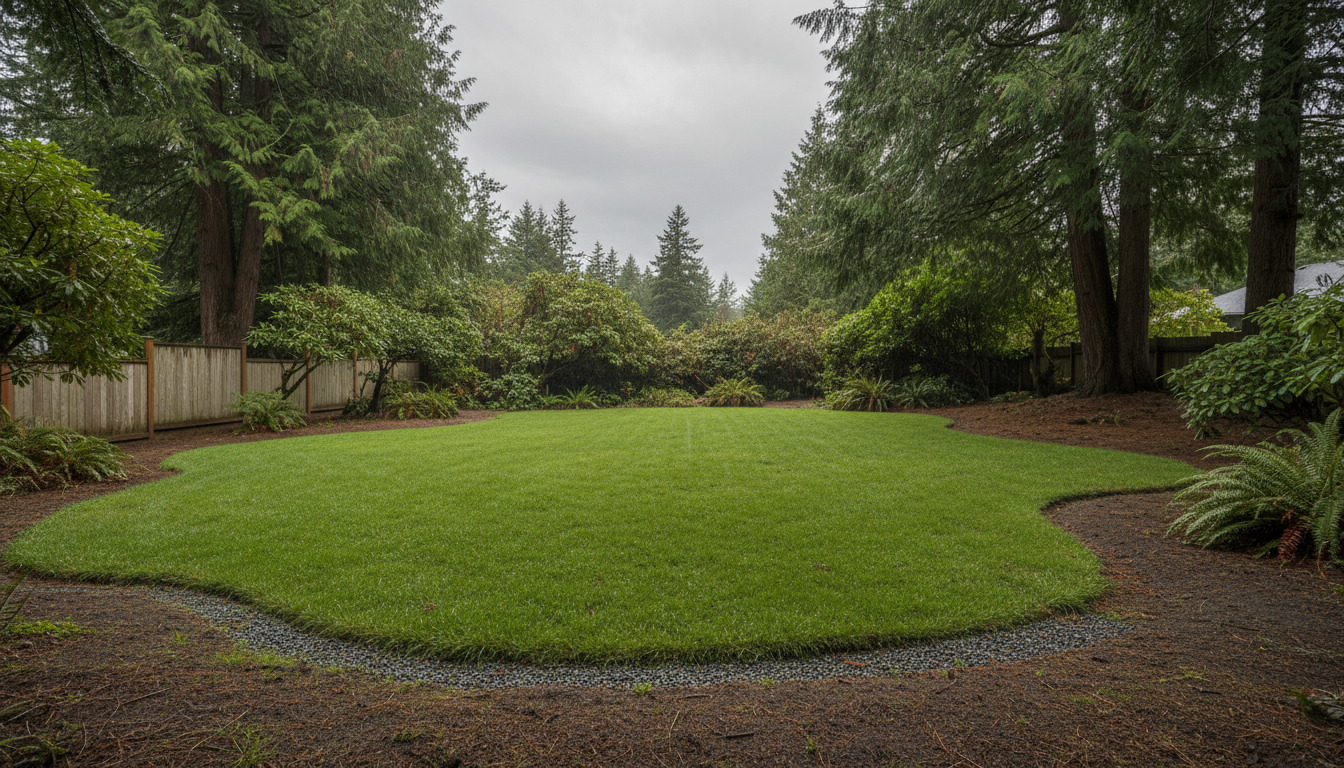
A soggy yard is more than an annoyance. Standing water can kill lawn, wash out beds, turn paths into mud, and send water toward places it should never sit, especially near foundations, crawlspaces, and driveways.
For Campbell River and Comox Valley home owners, drainage problems often show up after winter rain or a heavy spring storm. The lawn looks fine in August, then turns soft again once the wet season returns. A French drain may help, but it is not the answer for every wet yard.
This guide explains what French drain installation actually does, when it makes sense, when another fix is better, and what should be included in a clear landscaping quote. Dream Team Landscaping can assess drainage as part of full landscaping services and plan the work before patios, lawns, garden beds, or walkways are installed.
First, diagnose the yard drainage problem
A French drain is a gravel-filled trench with a perforated pipe that collects water and moves it to a better discharge point. That sounds simple, but the diagnosis comes first.
Common signs include:
· Water sitting on the lawn for days after rain
· Muddy footpaths along the side of the house
· Washed-out mulch or soil in garden beds
· Wet spots near downspouts
· Water collecting along retaining edges
· Soft soil near a patio or driveway
· Moss and thin grass in low areas
Environment and Climate Change Canada’s climate normals program tracks precipitation using long-term station data. For local contractors, that is a reminder to build drainage for repeated wet weather, not just one storm. Vancouver Island yards need to handle water over months, not hours.
Look at timing. If water appears only under a downspout, downspout routing may be the first fix. If water sits in a broad low lawn, grading may matter more. If a slope sends water into one line, a French drain or swale may help. If soil is compacted, aeration and soil amendment can reduce surface pooling in lighter cases.
The right answer depends on where the water starts, where it travels, and where it can legally and safely go.
When a French drain is the right solution
French drains work best for subsurface or concentrated water that needs a controlled path. They are useful where water collects along a low edge, behind a hardscape, beside a slope, or across a wet access route.
A French drain may be a good fit for:
· A soggy strip between houses
· Water moving from a bank into a lawn
· A wet line along a walkway or patio edge
· Drainage behind a garden bed border
· Chronic pooling where grading alone is not enough
· Areas where roof water has already been routed but soil stays wet
The drain needs fall. Water does not move uphill because a pipe is buried. The trench must be planned with slope, depth, pipe placement, clean outs where useful, and an outlet. If the outlet is wrong, the drain just moves the problem.
French drains also need protection from sediment. A proper installation usually includes washed drain rock, perforated pipe, and geotextile that wraps the stone and pipe to reduce clogging. Poor fabric choice, dirty fill, or no slope can shorten the drain’s working life.
If your drainage issue is part of a larger yard upgrade, Dream Team can plan it with landscape design and installation instead of treating it as an isolated trench.
When grading, swales, or downspout routing may be better
Not every wet yard needs a French drain. Sometimes the best fix is simpler, cheaper, or more visible.
Grading may be better when the lawn or bed surface is shaped the wrong way. If soil slopes toward the house, drain pipe alone is not a solid answer. The surface should direct water away first.
A swale may be better where water naturally crosses a yard. A swale is a shallow, shaped channel that guides runoff. It can be grassed, planted, or lined with rock depending on flow and appearance. Swales work well when water is mostly on the surface.
Downspout routing may be the first step when roof water dumps beside the foundation. Extending or redirecting downspouts can reduce the load on the yard. The discharge still needs to be legal and safe.
Soil amendment may help where compacted clay-like soil holds water near the surface. It will not solve a major slope or foundation issue, but it can improve lawn and bed performance in lighter cases.
For paved areas, base prep is often the missing piece. If a walkway or patio holds water, the answer may involve rebuilding base, correcting slope, or choosing a different surface. Dream Team’s concrete services can be coordinated with drainage planning so new hardscape does not trap runoff.
French drain installation sequence
A clean installation follows a clear order. Skipping steps is where many drainage projects fail.
Typical sequence:
1. Inspect the site after rain if possible.
2. Identify water source, route, and outlet.
3. Check underground utilities before digging.
4. Mark trench route, depth, and slope.
5. Excavate and remove spoil.
6. Install geotextile where specified.
7. Add washed drain rock.
8. Place perforated pipe at correct slope.
9. Cover pipe with more washed rock.
10. Wrap fabric to reduce sediment entry.
11. Backfill or finish with rock, soil, sod, or planting.
12. Test flow and clean up the site.
BC 1 Call tells excavators and homeowners to check for underground infrastructure before digging. That applies to drainage trenches, fence posts, patios, and any yard work that disturbs soil. Gas, telecom, water, power, and private lines can be closer than expected.
Permits are not always required for simple yard drainage, but municipal rules and discharge limits matter. You cannot send water onto a neighbour’s property or into a location that creates a hazard. In some cases, a contractor may recommend checking with the municipality before work starts.
French drain cost factors in BC yards
French drain cost depends less on the pipe itself and more on access, depth, length, disposal, material, and outlet design. A short, open trench across easy ground is one job. A deep side-yard drain between houses with hand digging and haul-away is another.
Main cost drivers include:
· Drain length and trench depth
· Machine access versus hand digging
· Soil type, roots, rocks, and old construction debris
· Disposal of excavated material
· Washed drain rock quantity
· Geotextile quality and pipe type
· Cleanouts, catch basins, or outlet work
· Repairing lawn, beds, gravel, or paving after installation
· Utility constraints and tight working areas
A detailed quote should explain what is included and what is not. Ask whether the price includes haul-away, finish restoration, cleanouts, drain rock type, and any connection to existing drainage. Guaranteed pricing depends on a clear scope.
Be careful with very low bids that do not describe trench depth, fabric, pipe slope, or outlet. Drainage work is easy to hide once covered. The problem may not show until the next long rain.
Base prep for Campbell River and Comox Valley rain
A drainage system is only as good as its base and outlet. Wet winters expose weak installs. If the trench fills with sediment or the outlet backs up, water returns to the surface.
Local yards often need one or more supporting steps:
· Removing compacted or organic soil from the trench route
· Using washed rock instead of dirty gravel
· Keeping fabric wrapped and overlapped properly
· Protecting drain outlets from debris
· Correcting surface grade above the drain
· Adding rock channels where runoff is visible
· Rebuilding paths with proper slope after drainage work
A French drain should also fit future landscaping. If you plan to add a patio, lawn, planting beds, or a gravel path, do the drainage first. That avoids tearing up new work later.
This is where site planning saves money. A contractor should be able to explain how water will behave after the work, not just where the pipe goes.
Maintenance after a French drain is installed
A good French drain should not require constant attention, but it should not be ignored. Keep outlets clear. Watch for sediment buildup. Avoid planting aggressive roots directly over the pipe. Do not let mulch or soil cover discharge points.
After major storms, walk the yard and check:
· Is water leaving the outlet?
· Are low spots still pooling?
· Has gravel shifted or sunk?
· Are leaves blocking catch basins or drain ends?
· Is water moving toward buildings or paved areas?
If the drain includes cleanouts, ask how often they should be checked. Maintenance is usually light, but clear access matters.
Get a drainage plan before rebuilding the yard
Drainage should be solved before new turf, patios, gravel paths, or garden beds go in. Otherwise, the finished work may hide a problem rather than fix it.
Dream Team Landscaping can inspect soggy lawns, muddy side yards, washed-out beds, and water routes across Vancouver Island properties. Request a free estimate to book a site visit and get a detailed quote for the right drainage fix.
FAQ
What is a French drain?
A French drain is a sloped trench with drain rock and perforated pipe. It collects water and moves it to a safer outlet.
Will a French drain fix standing water in my lawn?
It can if the pooling is caused by water that can be intercepted and moved. If the lawn is simply graded into a bowl, regrading may be needed too.
How long does French drain installation take?
Small residential drains may take a day or two. Larger or tighter sites can take longer, especially when hand digging, haul-away, or restoration is required.
Do I need to call before digging?
Yes. BC 1 Call should be contacted before excavation so underground utilities can be located.
Can a French drain connect to my downspouts?
Sometimes, but it depends on the site and local rules. Roof water may need separate routing, and discharge must not create issues for neighbours or public areas.
READY TO TRANSFORM YOUR GARDEN?
Relates Articles
Real landscaping advice from our team—seasonal tips, project ideas, and maintenance wisdom earned over 30 years on Vancouver Island.