


Fire-Resistant Landscaping for Comox Valley and Vancouver Island Properties
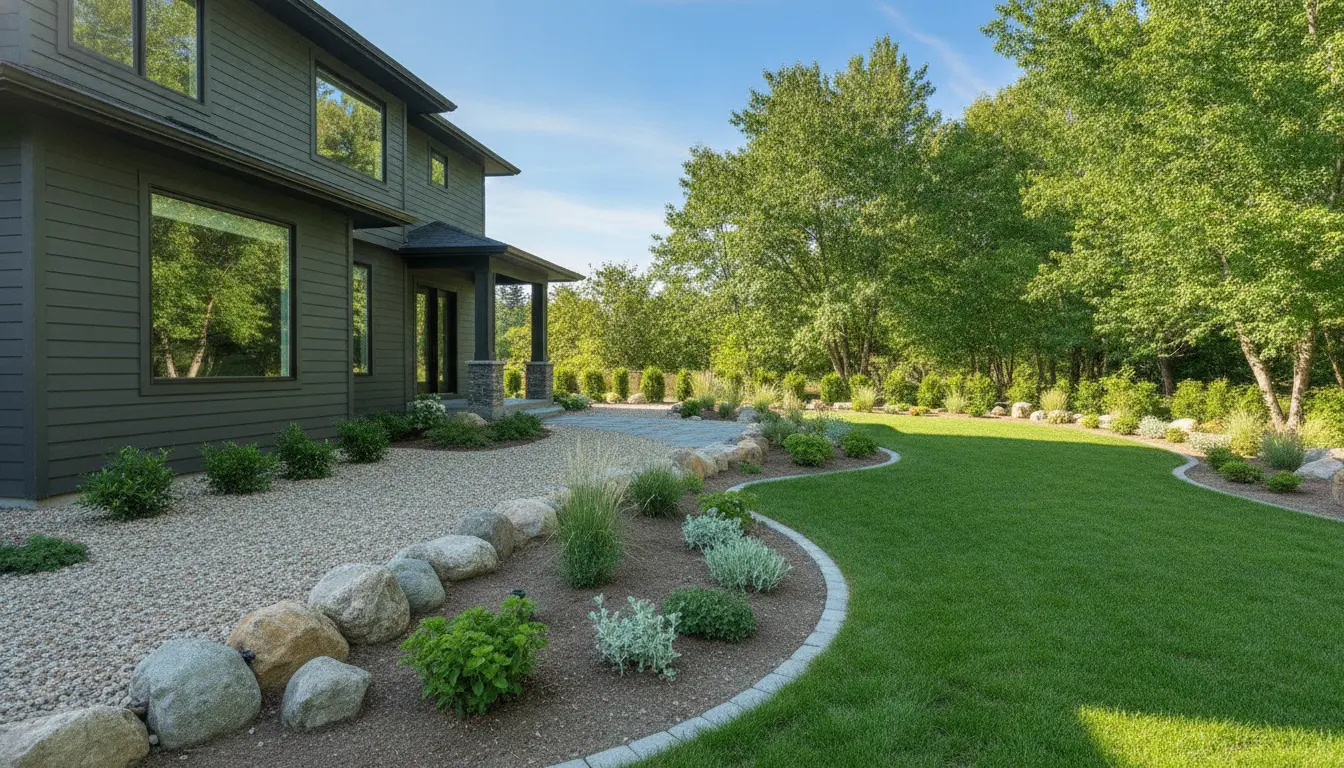
Wildfire planning is no longer only a rural acreage issue. A dry August, a cedar hedge close to siding, and a pile of bark mulch under a window can turn a normal Vancouver Island yard into a higher-risk property.
Fire-resistant landscaping is not about stripping a yard bare. It is about spacing, material choices, clean edges, and steady upkeep. For Comox Valley homeowners, that means planning for both wet winters and dry summer stretches.
Start with the first 10 metres around the home
The most important work happens close to the house. FireSmart BC says coniferous trees such as cedar, fir, pine, and spruce should not sit within 10 metres of a home because needles, cones, and resin burn readily. That matters in Comox, Courtenay, Cumberland, and rural properties where mature hedges often run tight to fences, sheds, decks, and siding.
Begin by walking the first 10 metres around the structure. Look for dry needles in gutters, shrubs touching siding, bark mulch under windows, stacked firewood beside the house, and branches hanging over the roofline.
A good first pass is simple:
- Keep grass below 10 centimetres during dry weather
- Move firewood, lumber, and dry yard debris away from buildings
- Replace bark mulch close to the home with gravel or rock
- Prune branches that touch roofs, siding, fences, or utility lines
- Thin dense shrubs so dead material does not collect inside them
If the property is larger or has several buildings, start with the house, then repeat the same review around garages, studios, sheds, and rental suites.
Choose materials that do not feed fire toward the house
Mulch is often the weak point in a tidy yard. Bark looks clean after installation, but dry bark beside siding or under a deck is a poor choice during fire season. On Vancouver Island, a safer design often uses non-combustible material close to the home and plants farther out.
For the first strip along the building, consider gravel, river rock, pavers, concrete, or bare mineral soil where it fits the design. These materials do not remove every risk, but they help avoid a direct fuel path to the structure.
Plant selection matters too. Deciduous trees and shrubs generally hold more moisture than conifers. Plants with open branching, low resin, and less dead interior material are easier to manage. FireSmart BC’s landscaping guidance notes that well-watered grass shorter than 10 centimetres burns with less force than tall, dry grass.
The practical goal is not a perfect plant list. It is a yard that does not build a continuous chain of dry fuel from the property edge to the house.
Keep hedges, shrubs, and trees maintained before summer heat
A hedge can look healthy on the outside while holding dry twigs and needles inside. That is common with older cedar hedges and dense boundary planting around Comox Valley homes. Once dry weather arrives, that hidden material becomes a problem.
Schedule pruning before the hottest part of summer, especially where branches touch fences, buildings, decks, or each other. Proper hedge trimming and pruning creates airflow, removes dead wood, and keeps growth from closing the gap between plant material and structures.
Do not overcut in a way that shocks the plant or leaves gaps that never recover. The right cut depends on species, season, and condition. A row of old cedars along a Courtenay driveway needs different treatment than mixed ornamental shrubs around a Campbell River patio.
For strata or commercial sites, add pruning to the annual maintenance plan instead of treating it as a one-off cleanup. It is easier to keep risk down with two planned visits than to repair years of dense growth at once.
Plan beds and hard surfaces around local weather
Comox Valley yards deal with a mix of winter rain, clay pockets, slope runoff, and summer dryness. Fire-resistant landscaping has to work with all of it.
A bed that drains poorly may push water toward the foundation in February. The same bed may dry out and collect dead plant material by August. That is why the design should account for grading, soil, access for maintenance, and the way water moves across the property.
Good planning often includes:
- Gravel or rock zones close to structures
- Plant spacing that allows mature growth without crowding
- Drip irrigation or practical watering access where needed
- Defined lawn edges that are easy to mow and trim
- Paths that create breaks between planted areas
- Clear access for cleanup, pruning, and hauling debris
For larger upgrades, landscape design and installation can connect the fire-risk work with the rest of the yard plan. That is useful when you are replacing an old bed, changing drainage, adding a patio, or reworking a slope.
Know when a cleanup is enough and when redesign makes sense
Some properties only need a maintenance reset. If the layout is good but the yard has become overgrown, pruning, debris removal, mowing, and mulch replacement may be enough.
Other sites need design changes. A cedar hedge tight to the house, bark mulch against the foundation, plants packed under deck stairs, and poor access for maintenance are layout problems. Trimming helps, but it does not fix the reason fuel keeps building in the wrong place.
For homeowners in Courtenay, Comox, Cumberland, and nearby rural areas, the right scope depends on the site. Dream Team can assess whether the next step is cleanup, pruning, bed replacement, hardscape changes, or a fuller plan for the yard.
If you are in the Comox Valley service area, request a free estimate before summer heat settles in. A site visit gives you clear next steps, practical priorities, and a quote that matches the work your property actually needs.
READY TO TRANSFORM YOUR GARDEN?
Relates Articles
Real landscaping advice from our team—seasonal tips, project ideas, and maintenance wisdom earned over 30 years on Vancouver Island.