


Fire Pit Ideas for BC Backyards
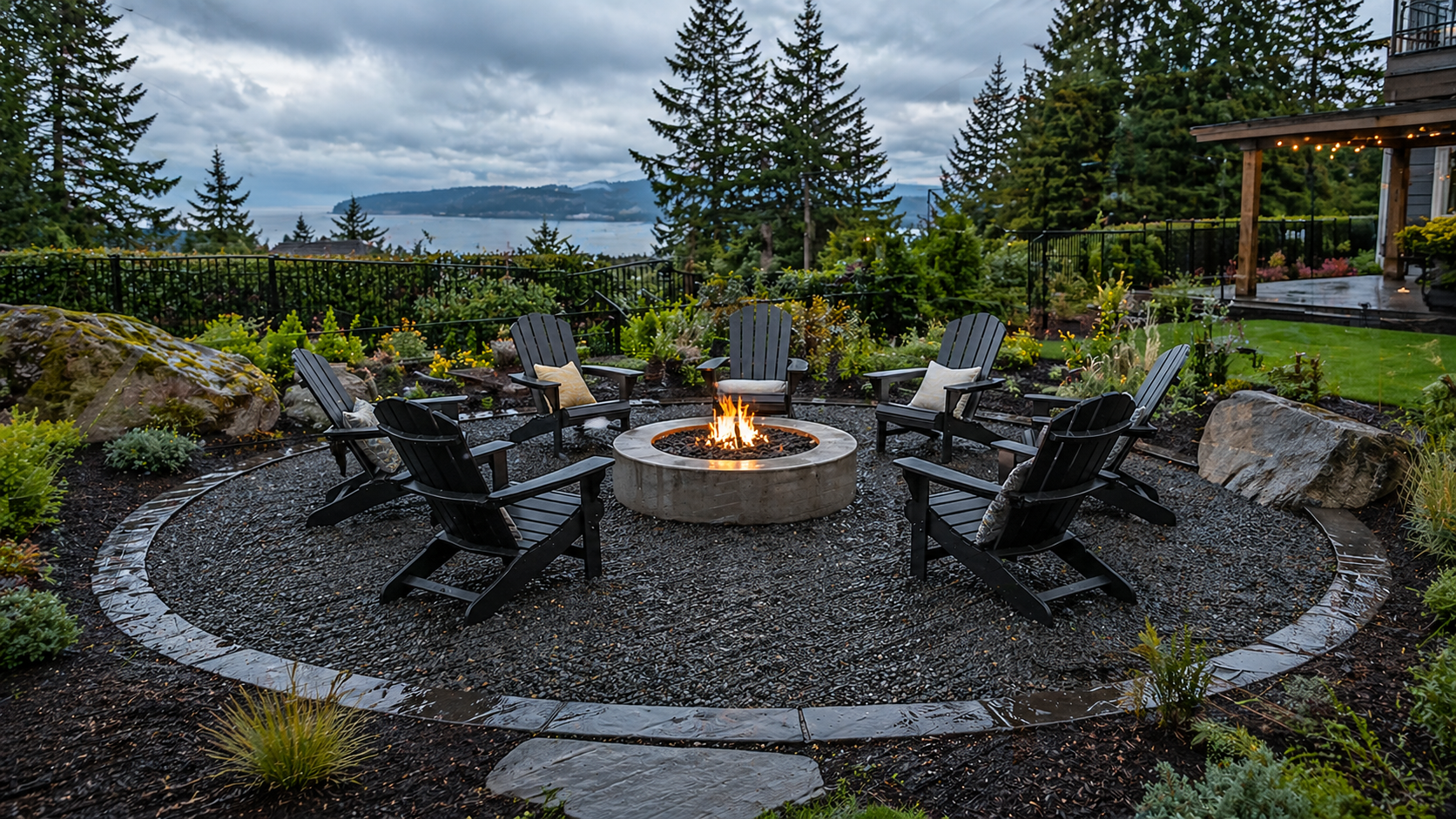
A good fire pit area is not just a ring of blocks in the grass. On Vancouver Island, it needs a stable base, safe clearances, wind awareness, drainage, seating room, and rules checked before anyone lights a fire.
The right design depends on your yard. A Campbell River waterfront property has different issues than a small Comox Valley backyard near fences and overhanging trees. A shaded yard may need moss control. A windy site may need a more protected layout. A family patio may need safer movement around chairs, paths, and steps.
Below are buildable fire pit ideas for BC homeowners who want a practical outdoor space, not a temporary weekend project. Dream Team Landscaping can help plan fire pit zones through landscape design and installation, concrete work, base prep, planting, and a clear site visit quote.
Check rules and fire safety before design starts
Before choosing stone, gravel, or seating, confirm the current municipal rules, regional restrictions, and provincial fire bans. Rules can change by season, weather, location, and fire type. What was allowed last spring may not be allowed during a dry summer.
The Province of BC posts fire bans and restrictions through BC Wildfire Service. Local governments may also have separate bylaws for backyard burning, recreational fires, appliance type, setbacks, smoke, and seasonal limits.
FireSmart BC recommends special care within the first 1.5 metres around a home and advises reducing combustible material close to structures. That matters for fire pit planning because furniture, wood piles, bark mulch, overhanging branches, and dry planting can increase risk.
This article is design guidance, not legal permission. Check current rules before use, and ask your local fire department or municipality if anything is unclear.
1. Gravel seating area with a defined fire ring
A gravel fire pit area is one of the most practical options for many Vancouver Island yards. It drains better than lawn, looks clean, and can be sized for the number of chairs you actually use.
A proper gravel seating area includes excavation, base material, compaction, edging, and finish gravel. Do not place loose gravel over grass and expect it to stay level. Chairs will sink, weeds will grow, and the edge will spread into the lawn.
Best for:
· Medium-sized backyards
· Informal seating areas
· Lower-cost hardscape zones
· Yards that need drainage improvement
· Areas away from structures and trees
Use angular gravel for stability around chairs. Add a hard border so the gravel stays in place. If the site is windy, consider a slightly sheltered location, but never tuck the fire pit under trees, close to fences, or near combustible walls.
2. Concrete patio fire pit zone
A concrete patio gives a fire pit area a solid, easy-to-clean base. It works well when the space is close to the house, connected to a door, or used for dining and seating.
Concrete is a good fit when you want:
· Stable chair and table placement
· Cleaner movement from house to yard
· A defined outdoor room
· Lower weed pressure than gravel
· Better support for heavier furniture
The patio still needs proper base, drainage slope, finish selection, and control joints. If water sits on the slab, moss and slipperiness become problems. If the patio is planned for a portable fire appliance, check product requirements and local rules.
Dream Team’s concrete services can be part of the planning when a fire pit patio needs excavation, forming, base prep, and finish work.
3. Fire pit patio with retaining-wall-style seating
Built-in seating can make a fire pit area feel finished, but it must be planned carefully. Seat height, back comfort, distance from the fire, drainage behind the wall, and movement around the space all matter.
This layout works well on yards with slight grade changes. A low seating wall can define the fire area while holding back a planting bed or slope. It can also reduce the number of loose chairs needed.
Watch for:
· Too little leg room around the fire pit
· Walls placed too close to heat
· Poor drainage behind blockwork
· No clear path in and out
· Planting too close to the heat zone
This is not a place for guesswork. Built-in walls and seating should be included in the quote with materials, heights, drainage, and finish details named clearly.
4. Small-yard corner fire pit
Small yards can still have fire features, but scale matters. A compact gravel or concrete pad may work better than a large circular layout.
Good small-yard planning uses:
· A compact fire appliance where allowed
· Two to four seats instead of a full circle
· Clear setback checks from fences and structures
· Non-combustible surface material
· Low planting that will not crowd the area
· Direct path access from the house
Do not force a large fire pit into a tight space. If safe spacing cannot be achieved, consider a non-burning focal point, outdoor lighting, or a patio seating area without fire.
5. Waterfront or windy-property layout
Wind changes everything. On open properties, waterfront lots, and exposed yards, smoke direction, ember risk, and comfort all need attention.
A windy site may need:
· A more protected seating orientation
· Lower-profile furniture
· Non-combustible ground material
· Wider clearance from dry grasses and shrubs
· A fire appliance suited to exposed conditions
· Clear storage for firewood away from structures
Never use planting as a risky wind block close to flame. Dense conifers, dry grasses, and bark mulch near a fire area create problems. Use safe spacing, hardscape, and careful placement instead.
6. Fire pit with low-maintenance planting
Planting around a fire pit should be durable, tidy, and set back from heat. The goal is to soften the space without creating fuel, leaf litter, or constant trimming.
Good choices depend on site conditions, but many designs use ornamental grasses, low shrubs, stone mulch near high-heat zones, and cleaner planting at the outer edge. Native or drought-tolerant plants can work well when placed far enough from the fire area and matched to sun and soil.
Avoid:
· Bark mulch close to the fire area
· Dry grasses right against seating
· Overhanging branches
· Plants with heavy leaf drop into gravel
· Thorny plants beside walking routes
FireSmart principles are useful here. Keep combustible material away from structures and be careful with plant placement near any fire feature.
7. Fire pit connected to a garden path
A fire pit area often works best when it is not isolated. A path from the house, patio, or driveway makes the space easier to use and keeps traffic off wet lawn.
Path options include compacted gravel, stepping stones, pavers, or concrete. The best choice depends on grade, budget, and how often the route will be used.
For Vancouver Island yards, path drainage is key. A path across a wet lawn should not become a channel that sends water to the fire pit area. The base, edging, and slope need to be planned as part of the whole project.
8. Fire pit as part of a full outdoor living plan
A fire pit can be the anchor for a larger outdoor area. That might include a patio, privacy planting, lighting, steps, lawn repair, gravel paths, and drainage corrections.
This approach is best when the yard has several issues at once. For example, a homeowner may want a fire pit, but the current lawn is soggy, the seating area is uneven, and the only access is a muddy side yard. In that case, the fire pit is one piece of a larger site plan.
A full plan should define:
· Fire pit type and location
· Seating count and spacing
· Surface material
· Drainage route
· Path access
· Planting zones
· Lighting needs
· Maintenance expectations
· Rules and safety checks before use
You can view recent landscaping projects for ideas on how hardscape, planting, and yard layout can work together.
Cost factors for backyard fire pit areas
Fire pit project costs vary because the fire feature is only one part of the job. The base, access, drainage, surface, seating, walls, and finish details often drive the price.
Main cost factors include:
· Excavation and disposal
· Gravel, concrete, pavers, or stone choice
· Base depth and compaction
· Drainage corrections
· Seating wall or border construction
· Access for machines and material delivery
· Planting and cleanup
· Fire appliance or ring selection
· Site constraints such as slope or tight side yards
A clear quote should separate the fire feature from site work. That helps homeowners understand what they are paying for and why one design costs more than another.
Book a site visit for a safer, better fire pit plan
Fire pit ideas only work when the design fits the site and the rules. A professional site visit can catch drainage, spacing, wind, slope, and access problems before money is spent on materials.
Dream Team Landscaping can help plan and install fire pit areas, gravel seating zones, concrete patios, planting, paths, and full outdoor living upgrades. Request a free estimate to book a site visit and get a detailed quote.
FAQ
Are backyard fire pits allowed in BC?
Rules depend on your municipality, location, fire type, and current fire bans. Check local bylaws and BC Wildfire Service restrictions before use.
What is the best surface for a fire pit area?
Gravel and concrete are common because they provide a defined, non-lawn surface. The best option depends on drainage, budget, chair use, and site access.
How much room do I need around a fire pit?
You need enough room for safe seating, movement, and required clearances from structures, fences, trees, and combustible materials. Local rules and fire appliance instructions should guide spacing.
Can I put a fire pit on a concrete patio?
Sometimes, depending on the fire appliance, heat protection, patio design, and local rules. The patio should be planned with safety, staining, heat, and drainage in mind.
What plants should go near a fire pit?
Use low-maintenance plants set back from heat and flame. Avoid bark mulch, dry grasses, overhanging branches, and plants that drop heavy debris into the fire area.
READY TO TRANSFORM YOUR GARDEN?
Relates Articles
Real landscaping advice from our team—seasonal tips, project ideas, and maintenance wisdom earned over 30 years on Vancouver Island.