


Fencing Installation Guide for Homeowners
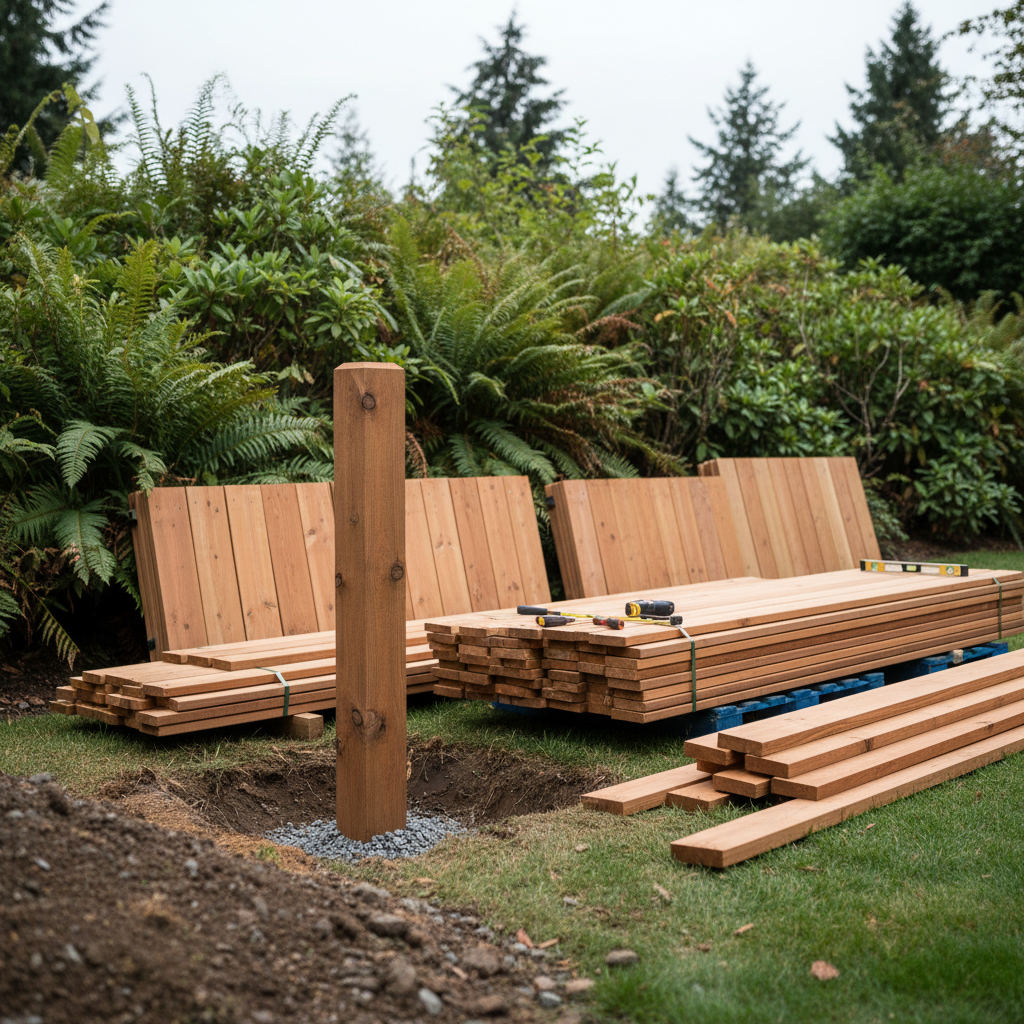
Fencing Installation Guide for Homeowners
Your Vancouver Island fence is more than just a line on your property-it is a real investment, often costing between $3,000 and $15,000. When it is built properly, it adds privacy, security, and pride to your home. When it is not, it becomes a daily reminder of a project that went wrong.
Many homeowners begin with good intentions. Standing in the backyard, it feels manageable. But that confidence often disappears once the digging starts-heavy clay soil, hidden rocks, uneven ground, and long days that stretch into weekends. What looked like a simple project can quickly become exhausting and stressful.
This guide is here to give you an honest, down-to-earth perspective. It clearly explains which parts of fence installation you can realistically do yourself on Vancouver Island, and which parts are better left to professionals who deal with these conditions every day. You will also learn about the hidden costs, permit requirements, and common mistakes that catch homeowners off guard.
By the end, you will be able to decide with confidence whether a DIY fence makes sense for you-or whether hiring a professional will save you time, money, and a lot of frustration.
The Local Challenges That Change Fence Installation on Vancouver Island
Picture this: you have carefully measured your fence layout, all the materials have arrived, and you are ready to start digging post holes on a Saturday morning. Then your shovel stops dead. Not on a small stone-but on a solid boulder that has been sitting just below the surface for generations.
This is what fencing installation on Vancouver Island often looks like in real life. The challenges here are very different from installing a fence in the Lower Mainland, Alberta, or many other regions. The ground is rocky, the soil conditions change from one yard to the next, and the weather can turn a simple plan into a long delay.
These local factors matter more than most homeowners expect. They affect how deep posts can be set, what tools are required, how long the job takes, and how much it ultimately costs. Understanding these realities is essential when deciding whether to tackle a fence yourself or bring in professionals who know how to work with Vancouver Island conditions.
Here's what makes island fencing unique:
- Rocky, clay-heavy soil that stops shovels cold and requires specialized equipment
- Ferry delivery costs and timing delays for materials and equipment rentals
- Coastal salt air that accelerates wood rot and metal corrosion (requiring strategic fence maintenance approaches)
- Heavy Pacific Northwest rainfall creating drainage and frost heave challenges
- Limited contractor availability, especially in rural communities like Quadra Island or Cortes
- BC building codes and property line setback requirements that vary by municipality
- Extended wet seasons that compress your installation window into summer months
Understanding these regional realities is the first step toward making a smart decision about your fencing project.
The Rocky Reality: How Island Soil Changes Everything
Vancouver Island's soil is the biggest reason fencing projects are harder to DIY here than most online guides suggest. You are not working with loose dirt or one consistent soil type. Instead, the ground is made up of old glacial deposits-a tough mix of heavy clay, poor drainage, and rocks that range from small gravel to massive, buried boulders.
In practical terms, this changes everything. Digging post holes takes far longer than national DIY articles claim. A hole that is "supposed" to take 30 minutes can easily take one to two hours when you are constantly hitting rock and adjusting your position. That extra time adds up fast, especially over a full fence line.
Power augers can help, but they are not a guaranteed solution. In rocky soil, augers often jam, bounce, or even break-sometimes damaging rental equipment and leading to extra fees. What starts as a simple weekend project can quickly turn into delays, added costs, and growing frustration. Understanding this reality upfront helps you decide whether DIY is realistic for your yard or whether professional help will save you time and stress.
Ferry Logistics and Material Delivery: The Island Tax Nobody Mentions
Living on an island adds challenges that many DIY guides never mention. On Vancouver Island and nearby islands, getting materials is not as simple as driving across town. Lumber yards, concrete suppliers, and tool rental shops are often across a ferry route. That single detail affects both your budget and your timeline.
Delivery fees are higher, and forgotten items are not a quick fix. If you miscalculate materials or need an extra tool, you cannot just "run back to the store." Each extra trip can mean more fees, more waiting, and lost weekends.
Most homeowners should expect $150-$400 in added ferry and delivery costs, depending on location. For example, a lumber delivery to Quadra Island can easily cost $200-$300 more than the same order delivered in Nanaimo. Renting specialized equipment such as a power auger or concrete mixer often adds another $100-$150 each way just for transport.
Time is affected just as much as money. A fence that might take three weekends in Vancouver can stretch to five weekends on the island due to delivery schedules, ferry timing, and equipment availability. During peak season (May to September), rental tools are often booked out quickly, with contractors securing equipment before homeowners can access it.
On Vancouver Island, planning ahead is not optional-it is essential.
What Is Fencing Installation? The Complete Process Breakdown
Fencing installation is the full process of building a fence on your property, not just putting posts and boards in the ground. It includes preparing the site, confirming exact property lines, installing fence posts correctly (the most important structural step), attaching horizontal rails, and securing panels or pickets. It also requires the right permits, compliance with BC building codes, proper setbacks from property lines, and construction methods suited to local soil and climate conditions.
It helps to think of fence installation as a small construction project that only looks simple from a distance. A finished fence may appear to be just posts, rails, and boards, but getting there requires careful measuring, accurate layout, and a solid understanding of your land. Uneven ground, drainage issues, and strong coastal weather all affect how a fence should be built. When these factors are handled correctly, your fence stays straight, secure, and durable for years. When they are ignored, problems show up quickly-leaning posts, sagging panels, and costly repairs.
The seven main steps in any fencing installation are:
- Site preparation and clearing - Remove vegetation, debris, and existing obstacles
- Property line verification - Confirm your boundaries (ideally with professional property surveying) and setback requirements
- Fence line layout and marking - Use string lines and chalk to mark where posts will go
- Post hole excavation - Dig holes to proper frost line depth (18-24 inches on Vancouver Island)
- Post installation and concrete setting - Set posts in concrete mix, ensuring they're plumb and level
- Rail and frame installation - Attach horizontal supports between posts
- Panel, board, or picket installation - Attach the visible fencing material and any gates
Each step builds on the previous one, and skipping or rushing any step creates problems down the road.
Why Correct Post Installation Determines Fence Longevity
Fence posts are the most important part of the entire installation. They carry the full weight of the fence and absorb wind pressure during storms. If the posts are not installed correctly,everything built on top of them will eventually fail. This is the stage where most DIY fencing projects either succeed-or start to show serious problems.
On Vancouver Island, frost depth plays a critical role. The frost line typically sits 18 to 24 inches below ground, depending on your exact location and elevation. Fence posts must extend below this depth. As soil freezes and thaws through the seasons, shallow posts are slowly pushed upward by frost heave, causing fences to lean, shift, or loosen over time.
Concrete setting also requires patience in our cool, damp coastal climate. While concrete may feel firm on the surface within a day, proper curing usually takes 24 to 48 hours, and sometimes longer when temperatures are low or moisture levels are high. Rushing this step-by attaching rails or panels too soon-can compromise the post alignment. Taking the extra time at this stage is what prevents leaning fences, cracked concrete, and costly rebuilds later.
Understanding BC Building Codes and Permit Requirements for Fencing
Fence rules in BC can change slightly from one municipality to another, but the basics are usually the same across Vancouver Island. Most areas limit privacy fences to about 6 feet in front yards and slightly taller in back yards. Many towns also require the fence to be built 12-24 inches inside your property line, meaning it must stay fully on your side, not right on the shared boundary.
You will usually need a permit, which costs around $50-$200. Skipping the permit might seem easier, but it can cause bigger problems later-like being told to remove the fence or facing issues when you try to sell your home. Taking a few minutes to check your local rules first can save you time, money, and stress down the road.
Strata and HOA considerations: If you live in a planned community or a strata property on Vancouver Island, fencing comes with extra rules. In many cases, strata councils have their own requirements for fence height, style, color, and materials-and these rules are often stricter than city or municipal codes.
Before you can start, you usually need to submit your fence plans to the strata council 30-60 days in advance. Some communities only allow certain fence styles, such as specific cedar designs or approved colors, to keep the neighborhood looking consistent. In some cases, strata rules may even require the fence to be installed by approved professionals rather than as a DIY project.
This approval process can add weeks to your timeline and may limit your options. That is why it is important to check your strata bylaws before buying materials or starting work. Finding out about restrictions after you have already purchased lumber can turn an exciting project into a costly mistake.
Should I Install My Own Fence or Hire a Professional? The Honest Decision Framework
This is the question that matters most. Not "Can I install a fence?" but "Should I install this fence in my situation?"
Here's your self-assessment checklist:
- Do you have experience with basic construction or carpentry projects?
- Are you physically comfortable with 6-8 hours of heavy digging and lifting per day?
- Can you work safely on ladders and with power tools?
- Is your soil mostly clay or does it have significant rock?
- Do you have easy access to tool rentals (not requiring ferry transport)?
- Can you commit 2-3 full weekends or 3-4 weeks of evenings?
- Are you willing to pull a permit and navigate municipal requirements?
- Is your property relatively level, or are you dealing with slopes?
If you answered "no" to three or more questions, professional fencing installation makes financial sense even when you factor in labor costs.
When DIY Fencing Installation Makes Sense (And When It Doesn't)
DIY fencing works best when the project is simple and the conditions are forgiving. If your yard is mostly level, the soil is manageable (more clay than rock), and the fence run is short-usually under 50 feet-DIY can be a reasonable option. It is also well-suited for lighter, simpler fences, such as 4-foot wire fences or basic picket fences, where precision and load requirements are lower.
DIY becomes much harder when the project is more complex. Long privacy fences, rocky ground, sloped yards, tight spaces near neighbours, or uncertain property lines all increase the risk of mistakes. In these situations, errors are more visible and more expensive to fix. If you are working on a tight timeline, DIY may not make sense at all. When you factor in your time, added stress, and the risk of rework, hiring professionals can often be the more cost-effective and reliable choice.
The Skill Assessment: What Experience You Actually Need
You do not need to be a professional carpenter to build a fence. What you do need is a basic level of comfort with tools and hands-on work. That means being able to use a post-hole digger or power auger, read a tape measure accurately, use a level properly, and mix and pour concrete without rushing the process. It also helps to be willing to pause, look things up, or watch a tutorial when something is not clear.
The most important skill, however, is problem-solving. On Vancouver Island, things rarely go exactly as planned. You may hit a large rock, discover uneven ground, or notice a post leaning slightly out of plumb. The key question is whether you can calmly adjust-shift a hole, change your approach, or fix the alignment before moving on. These are not advanced carpentry skills. They are practical thinking skills that determine whether a DIY fence turns out solid or becomes a source of frustration.
How Rocky Soil, Clay, and Slopes Affect Your DIY Feasibility
Rocky soil is the hardest condition to deal with. Every time you hit a rock, the job slows down. Digging takes longer, equipment rentals cost more, and frustration builds fast. Clay soil is still tough, but it is more predictable-you can usually push through it with the right tools. Slopes, however, make everything more complicated. Posts on the downhill side need to be set deeper to keep the fence level, and lining everything up becomes slow, careful work.
When building a fence on a slope, there are two main options. Stepped fencing keeps each section level and drops down in steps. It looks clean and professional, but every section must be measured and planned precisely. Raked fencing follows the slope of the ground in a straight line. This works well for wire or chain-link fences but usually looks awkward with solid privacy panels.
For most DIY homeowners, slopes steeper than about 15 degrees are where projects start crossing into "hire a professional" territory. You are dealing with angled cuts, posts set at different depths (sometimes more than 30 inches on the downhill side), and drainage concerns. If water runoff is not handled properly, a fence can cause erosion or stability problems within months.
The honest reality is this: sloped land combined with rocky Vancouver Island soil is extremely difficult for DIY fencing. Unless you have strong construction experience and genuinely enjoy long, physically demanding weekends, professional landscaping services are usually the smarter and safer choice.
The Real Cost Breakdown: DIY vs. Professional Fence Installation
Let's talk actual numbers instead of vague ranges. Here's what three common Vancouver Island fencing installation scenarios look like when you run the real math:
Scenario 1: Simple 50-foot Cedar Picket Fence (4 feet high, level ground, decent soil)
DIY Costs:
- Materials (cedar pickets, posts, rails, hardware): $850
- Concrete and gravel: $120
- Post-hole digger rental (weekend): $75
- Level, string line, miscellaneous tools: $60
- Permit: $100
- Total: $1,205
- Time investment: 2 weekends (24-30 hours)
Professional Installation:
- Complete turnkey installation: $2,200-2,800
- Time investment: 1 day
The verdict: DIY saves you about $1,000-1,600, and the project is genuinely manageable if you've done any basic construction. Solid DIY candidate.
Scenario 2: 100-foot Privacy Fence (6 feet high, some rocks, slight slope)
DIY Costs:
- Materials (pressure-treated posts, cedar boards, rails, hardware, gate): $2,200
- Concrete and gravel: $280
- Power auger rental (2 weekends): $260
- Saw, drill, level, additional tools: $180
- Permit: $150
- Unexpected: extra concrete for problem posts, broken auger bit: $150
- Total: $3,220
- Time investment: 3-4 weekends (40-50 hours)
Professional Installation:
- Complete turnkey installation: $5,500-6,500
- Includes warranty, faster completion, code compliance guarantee
- Time investment: 2-3 days
The verdict: DIY saves $2,300-3,300, but your time investment is significant and the difficulty level jumps considerably. If you value your weekends at $40/hour, your "savings" shrink to $300-1,300. This is the tipping point where many homeowners choose pros.
Scenario 3: 150-foot Privacy Fence (6 feet high, rocky/clay soil, slope, corner gates)
DIY Costs:
- Materials (premium posts, cedar privacy boards, heavy-duty hardware, 2 gates): $3,800
- Concrete and gravel: $450
- Power auger rental (4 weekends): $520
- Additional tools, saw blades, drill bits: $220
- Permit: $150
- Unexpected: ferry delivery surcharge, equipment repair, extra help for gate install: $400
- Total: $5,540
- Time investment: 5-6 weekends (60-75 hours) + high frustration probability
Professional Installation:
- Complete turnkey installation: $8,500-10,500
- Includes warranty, proper slope handling, professional gate installation
- Time investment: 3-4 days
The verdict: DIY saves $3,000-5,000 on paper, but at this complexity level, you're risking mistakes that cost hundreds to fix and taking 1-2 months of your life. Most homeowners genuinely regret not hiring pros for projects at this scale, especially on Vancouver Island's challenging terrain.
The hidden costs people forget: Muscle pain, marital tension from lost weekends, re-renting tools when the project runs long, buying the tool you broke, permits you pulled but couldn't use because the project stalled, and the opportunity cost of not doing other things you actually enjoy.
Professional Fencing Installation Benefits: When Pros Are Worth Every Dollar
Here's what you're actually paying for when you hire professionals for fencing installation beyond just "someone else does the work":
Experience with Vancouver Island conditions. A professional fencing crew has already dealt with the exact conditions in your area. After installing hundreds of fences on Vancouver Island, they know what kind of soil they will hit before digging even starts. The rocks, drainage issues, and problem spots are not surprises-they are familiar challenges.
They also understand local rules. Experienced crews know which municipalities are strict about permits and setbacks and which are more relaxed. This local knowledge helps avoid mistakes, delays, and costly fixes, making the job faster and more reliable overall.
Proper equipment without rental hassles. Professional crews use commercial-grade equipment designed for tough conditions. Their augers can handle rocks that would easily jam or break a rental unit. They also have proper concrete mixers, heavy-duty levels, and specialized tools for difficult cuts and uneven ground.
Because they already own this equipment, you do not have to pay rental fees or worry about pickup and return logistics. That alone removes a major source of cost, delays, and stress from the project.
Speed and efficiency. What might take you three full weekends often takes a professional crew only two days. They are not learning as they go or stopping to troubleshoot basic issues. They already know the process.
There are no pauses to watch tutorials or figure out why something does not line up. The work moves efficiently from start to finish, and the project is completed quickly so you can get back to enjoying your yard instead of living in a construction zone
Warranty and accountability. When a professional installs your fence, their work is usually backed by a warranty. If a post starts leaning six months later, you make a call and they come back to fix it.
With a DIY fence, that responsibility is yours. If something shifts or fails, you either repair it yourself or pay a professional to fix the mistake-often at a higher cost than having hired professionals from the start.
Code compliance guarantee. Professional fencing installation means experienced contractors handle the details that are easy to get wrong. They understand BC building codes, manage permits, and make sure the fence meets all local requirements. When it comes time to sell your home, there are no questions about whether the fence was built legally.
The real question is not whether professionals cost more-they usually do. The question is whether that extra cost is worth the time, stress, and weekends you save by letting experienced hands take care of the job from start to finish.
Making the Right Choice for Your Property
Choosing between DIY and professional fencing really comes down to your situation-your property, your skill level, and, honestly, how you want to spend your weekends. If your yard is rocky, sloped, or otherwise challenging, professional installers remove the guesswork and deliver a fence that is built to last for decades. If the project is simple, the soil is manageable, and you have the time and patience to learn, DIY can be a smart way to save money.
On Vancouver Island, this decision matters more than most people realize. Our wet climate and rocky ground are unforgiving. A fence installed incorrectly here will fail faster and cost more to fix than the same mistake would in easier conditions.
If you are leaning toward professional installation-or just want an expert opinion before committing either way-Dream Team Landscaping is happy to help. We offer honest advice and free quotes so you can make the smartest decision for your property. Sometimes the best first step is simply talking to a professional before you pick up a shovel.
READY TO TRANSFORM YOUR GARDEN?
Relates Articles
Real landscaping advice from our team—seasonal tips, project ideas, and maintenance wisdom earned over 30 years on Vancouver Island.