


Composite Decking vs Wood for BC Homes
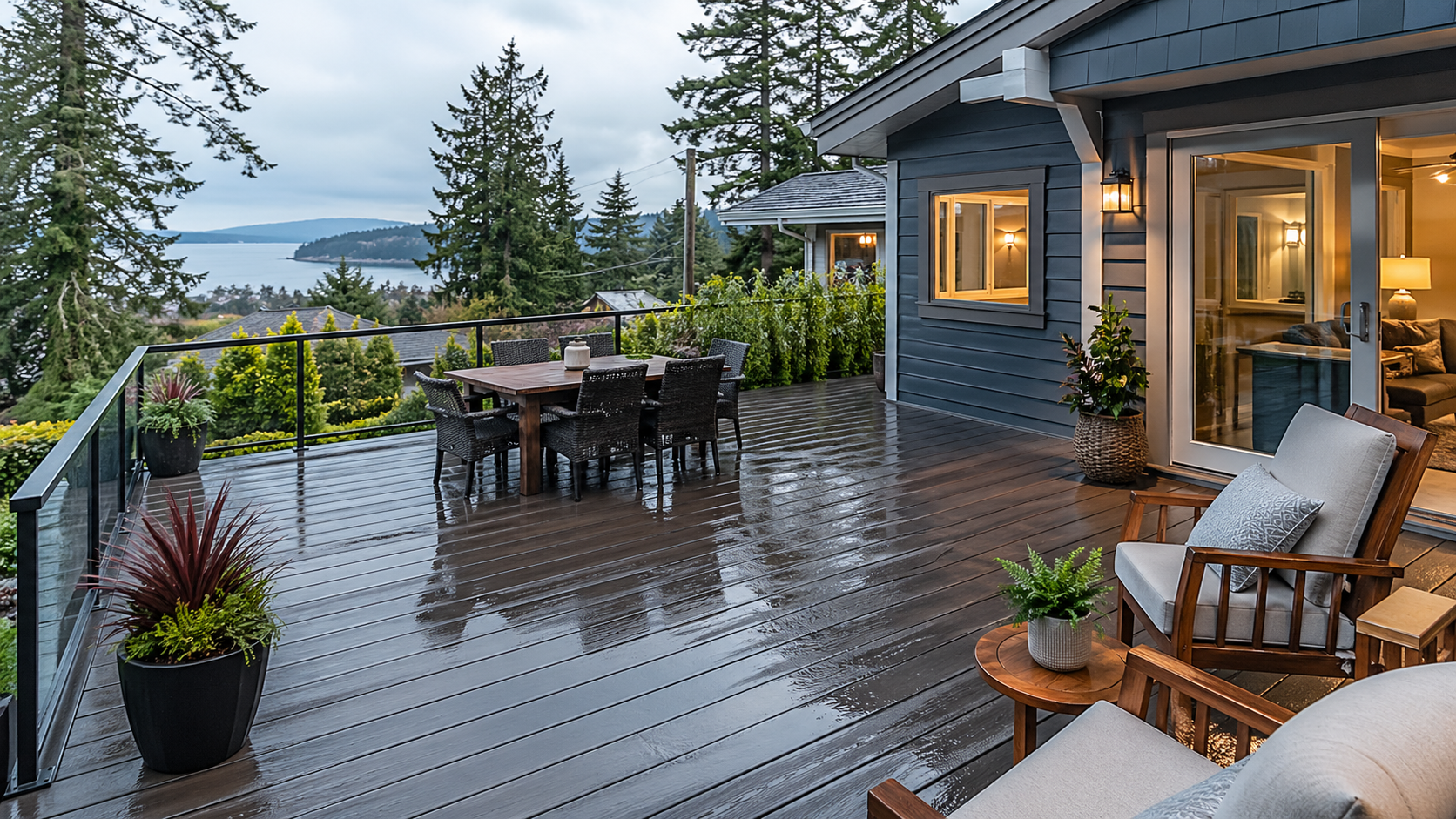
Decking decisions are different on Vancouver Island. A material that looks great in a dry climate can become slippery, mossy, swollen, or high-maintenance after a few wet seasons in Campbell River or the Comox Valley.
The question is not just composite decking vs wood. It is which material fits your site, budget, maintenance habits, and exposure to rain, shade, salt air, and summer sun.
This guide compares composite, cedar, and pressure-treated wood from a local contractor point of view. If you are planning a larger outdoor living upgrade, Dream Team Landscaping can help assess the yard as part of landscape installation and maintenance services, including grading, paths, patios, planting, and build-ready planning.
Start with the site, not the product
Deck boards get most of the attention, but the site decides whether a deck performs well. Shade, drainage, airflow, height above grade, nearby trees, and winter moisture all affect the result.
BC Housing’s guide on safe and durable wood decks and balconies focuses heavily on drying, ventilation, flashing, material choice, and maintenance. That is the right frame for coastal BC. A deck is a system, not a surface.
Before choosing boards, look at:
· Does the area stay shaded most of the day?
· Is there good airflow under the deck?
· Does water drain away from the structure?
· Are trees dropping needles or leaves onto the surface?
· Will the deck connect to a door, stairs, patio, or slope?
· Is the framing in good condition?
A sunny, open deck behaves differently than a low, shaded deck tucked beside cedars. If the site traps moisture, both composite and wood need proper detailing.
Composite decking: main pros and cons
Composite decking is popular because it reduces staining, sealing, and splinter issues. Many products use a mix of recycled plastic and wood fibre, with capped boards designed to resist moisture and fading better than older materials.
The main benefits:
· Less routine staining or sealing
· No splinters under bare feet
· More consistent board appearance
· Good fit for homeowners who do not want annual deck upkeep
· Often strong warranties when installed to manufacturer specs
The tradeoffs:
· Higher upfront material cost
· Can feel hotter in full sun, especially darker colours
· Surface grip varies by product and texture
· Scratches or heat damage may be harder to repair than wood
· Framing and ventilation still matter
Search data from the May brief shows “composite decking vs wood” and “best composite decking canada” each at 170 monthly searches, with related searches around lifespan and pros and cons. Homeowners are clearly comparing long-term cost, not just the day-one price.
Composite makes sense when the homeowner values lower upkeep and a consistent look. It is less suited to projects where low upfront cost is the main goal.
Wood decking: cedar and pressure-treated options
Wood still has a place. Cedar looks natural, fits West Coast homes, and can be repaired or refinished. Pressure-treated lumber is often cheaper upfront and common for framing and budget-conscious builds.
The benefits:
· Lower upfront board cost in many cases
· Natural look, especially with cedar
· Easier to cut, repair, sand, or replace in sections
· Good grip when clean and properly maintained
· Familiar material for many builders
The tradeoffs:
· Needs regular cleaning, staining, or sealing
· Can split, cup, rot, or splinter if neglected
· More vulnerable in shaded, damp locations
· Appearance changes with weather and UV exposure
· Fasteners and detailing need attention in wet climates
Wood is a good choice for owners who like the natural look and are prepared to maintain it. If you know you will not wash, stain, or inspect the deck, wood may become frustrating.
Cedar can last well when detailed and maintained, but it is not magic. Shade, standing debris, and trapped moisture will shorten its life.
Moisture, moss, and algae on Vancouver Island
Wet conditions are where many deck choices get tested. Moss and algae grow fastest where surfaces stay damp and shaded. Leaves and needles hold moisture against boards. Poor airflow under low decks slows drying.
Composite boards resist rot better than wood boards, but they can still grow surface algae and become slippery if not cleaned. Wood can absorb moisture, leading to swelling, checking, and decay if maintenance is ignored.
Design choices help:
· Leave gaps as specified so water and debris can clear.
· Keep soil and mulch away from framing.
· Improve airflow under low decks where possible.
· Avoid trapping leaves against house walls and stair corners.
· Clean shaded decks before moss becomes thick.
· Use proper flashing where the deck meets the house.
The material matters, but detailing matters just as much. A good composite board on poor framing is still a risky build.
Slip resistance and day-to-day use
Slip risk depends on texture, slope, cleaning, shade, footwear, and moisture. No deck surface should be treated as maintenance-free in winter.
Composite boards vary. Some capped products have better texture than others. Smooth boards may look clean but can feel slick when algae or frost develops. Wood can offer good traction when clean, but moss on wet wood is a problem.
For stairs and main paths, board choice and layout should be practical. If the deck is a daily route from the back door to a parking area, grip and drainage should be discussed during the quote. If it is mainly a sunny summer lounge space, heat and bare-foot comfort may matter more.
Homeowners should also think about railings, steps, lighting, and transitions. A safe deck is not just boards.
Lifespan and lifetime cost
Composite usually costs more upfront but can reduce maintenance labour and product costs over time. Wood usually costs less to build but needs more upkeep.
A fair comparison should include:
· Initial material and labour
· Staining or sealing schedule for wood
· Cleaning needs for both materials
· Expected repairs or board replacement
· Framing condition and moisture protection
· Disposal or rebuild cost later
Manufacturer claims vary, and warranties depend on proper installation. For wood, lifespan depends heavily on detailing and maintenance. For composite, board quality, colour, fastening system, and ventilation matter.
The best approach is to ask for a quote that separates board material, framing work, stairs, railings, demolition, and site prep. That makes the price easier to compare.
Dream Team can include decking discussions as part of outdoor space planning, especially when a deck connects to a patio, lawn, or walkway.
Framing, ventilation, and drainage
Many deck failures start below the surface. If framing is soft, undersized, poorly flashed, or sitting in a damp pocket, new boards will not fix the structure.
Before resurfacing an old deck, inspect:
· Joists and beams for rot or movement
· Ledger attachment and flashing
· Post bases and soil contact
· Stair framing
· Fasteners and connectors
· Drainage under and around the deck
· Clearance for airflow
BC Housing’s deck durability guidance names ventilation, drying, flashing, and moisture point sources as major design topics. That is especially relevant on Vancouver Island, where wet seasons are long and shaded properties are common.
If water from the yard runs toward the deck, grading should be corrected. If the deck sits too close to wet soil, consider whether a raised deck, concrete patio, or paver area would be better.
When decking may not be the best choice
A deck is not always the right solution. On some yards, a concrete patio or paver area can be more stable, easier to clean, and better suited to grade.
Consider a patio instead when:
· The yard is already close to door height
· You want a fire pit area with non-combustible surfaces
· The site is very damp and shaded
· You want lower height and fewer railings
· You need a durable surface for furniture, planters, or heavy use
· The existing grade allows proper drainage
Concrete and pavers have their own prep requirements. Base, slope, drainage, and finish all matter. Dream Team’s concrete services can be considered when a ground-level surface makes more sense than a deck.
How to choose between composite and wood
Choose composite if you want lower routine upkeep, a consistent look, and are willing to pay more upfront for convenience. It is often a good fit for busy homeowners who will clean the surface but do not want to stain every year or two.
Choose wood if you prefer a natural look, want a lower starting cost, and are comfortable maintaining it. Cedar can be a strong choice when the design allows drying and the owner keeps up with cleaning and finish work.
In either case, do not ignore the structure. Board choice should come after site assessment, framing review, drainage planning, and a clear scope.
Book a site visit before choosing boards
The right deck material depends on more than a product label. It depends on your yard, how water moves, how much shade the area gets, and how you plan to use the space.
Dream Team Landscaping can help plan outdoor living upgrades that connect decks, patios, walkways, planting, and drainage into one clear scope. Request a free estimate to book a site visit and get a detailed quote.
FAQ
Is composite decking better than wood in BC?
Composite is often easier to maintain in wet BC conditions, but it still needs cleaning and proper installation. Wood can work well when detailed and maintained.
How long does composite decking last?
Many composite products are sold with long warranties, but lifespan depends on product quality, installation, framing, ventilation, and care.
Is cedar better than pressure-treated wood?
Cedar has a natural West Coast look and good decay resistance, but it costs more than many pressure-treated options. Both need proper detailing and maintenance.
Does composite decking get slippery?
It can if algae, frost, or debris builds up. Texture varies by product, so grip should be discussed for stairs and shaded areas.
Should I build a deck or a concrete patio?
A deck may suit raised entries or sloped yards. A concrete patio may suit ground-level areas, fire pit zones, and spaces where a low, durable surface is preferred.
READY TO TRANSFORM YOUR GARDEN?
Relates Articles
Real landscaping advice from our team—seasonal tips, project ideas, and maintenance wisdom earned over 30 years on Vancouver Island.