


Chain Link Fence Posts: Selection, Installation, and Maintenance
Chain Link Fence Posts: Selection, Installation, and Maintenance
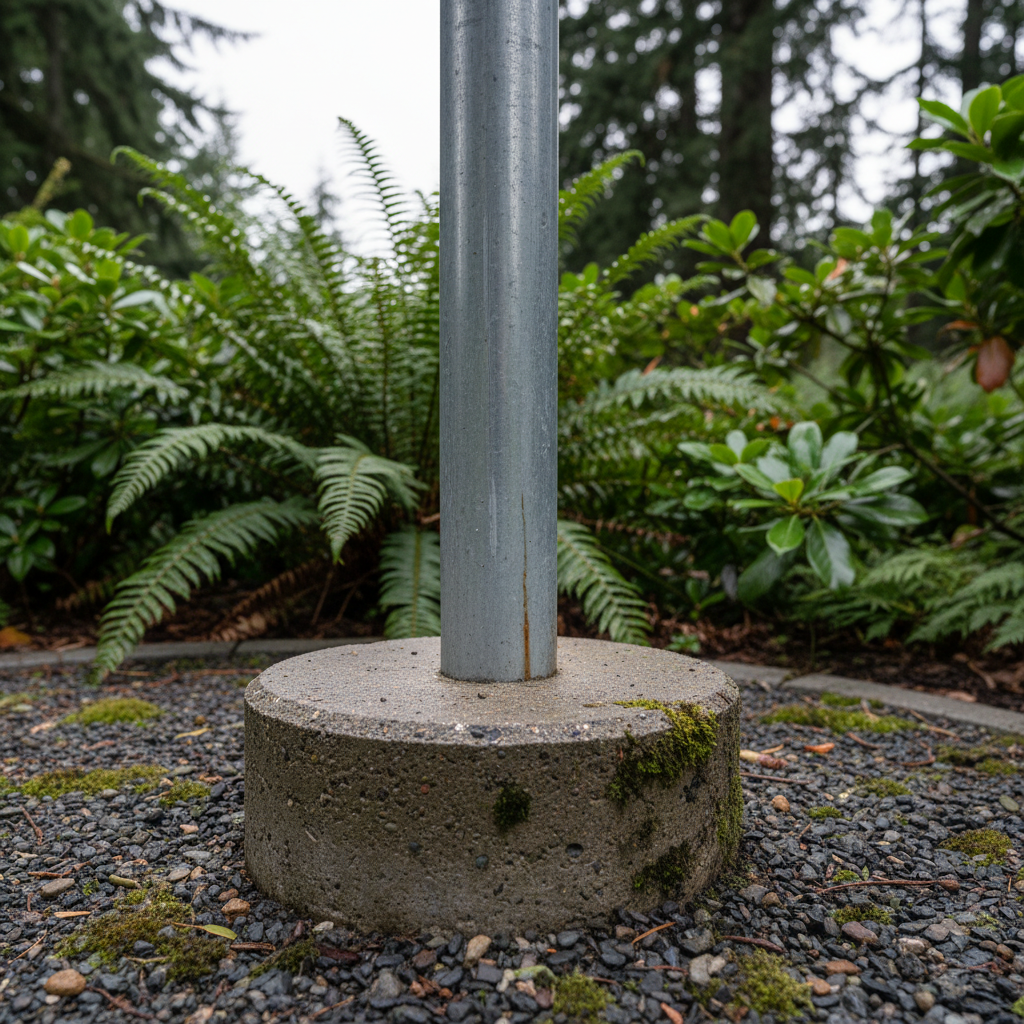
Last month, I pulled a chain link fence post out of a homeowner's yard in Courtenay. It was five years old, part of a $3,000 fence installation. The concrete footing came out of the ground like a loose tooth. The steel at the base had completely corroded through, leaving a rust-stained cavity where solid metal should have been.
The homeowner's fence failed for the same reason dozens fail every year on Vancouver Island. She followed standard installation advice written for dry, inland climates-advice that ignores what salt air, heavy rain, clay soil, and coastal wind do to buried metal.
On Vancouver Island:
- Salt air accelerates corrosion 40-60% faster than inland areas
- Winter rainfall shifts clay soil, cracking concrete and pushing posts upward
- Pacific wind exposure demands deeper post installations
- Ferry logistics change material sourcing and replacement costs
Most chain link fence posts here fail within 8-12 years, compared to 15-20 years in drier climates. This is not a material defect. It is an installation problem that starts the day someone digs a hole using mainland standards.
This guide explains what actually changes on Vancouver Island:
- Which post materials survive salt air
- How deep posts must be set in coastal clay
- What separates a five-year fence from a twenty-year fence
Why Chain Link Fence Posts Fail on Vancouver Island
Homeowners often follow generic advice. Two winters later, posts lean, concrete cracks, and rust streaks appear along the fence.
This happens because three coastal factors work together, and most guides ignore them.
1. Salt Air Corrosion
Salt air does not just sit on metal. It triggers electrochemical reactions that corrode steel faster when moisture is present. Vancouver Island receives 800-1,200 mm of rain annually, mostly from October to March. Posts rarely dry out between storms, unlike inland regions where drying slows corrosion.
2. Clay Soil Movement
Clay soil holds water and expands during wet months, then contracts in dry periods. This expansion and contraction pushes posts upward-a process called heaving. Concrete cracks, footings loosen, and posts lean by spring.
3. Coastal Wind Loads
Pacific winds create forces that inland fences never experience. A sustained 30 km/h wind produces more than 50 pounds of force per linear meter of chain link fabric. That force transfers directly to posts at the concrete interface.
Campbell River Building Supply tracked warranty claims and found posts installed at 30-inch depths failed three times more often than posts set at 42 inches. The deeper posts reached stable subsoil below the frost and clay expansion zone.
The Hidden Cost of Generic Fencing Advice
When a post fails, the cost goes beyond materials:
- Fence security gaps during repair
- Difficulty scheduling contractors
- Ferry costs for island properties
- Reduced property appeal to buyers
- Potential liability during windstorms
Generic advice does not account for salt spray, heavy rain, and clay soil working together. These conditions shorten post lifespan by about 40% compared to interior BC.
Vancouver Island's Triple Threat: Salt, Rain, and Shifting Ground
Salt crystals absorb moisture from humid air, creating a constantly wet surface on metal. This consumes galvanized coating 2-3 times faster than inland locations. Once the zinc layer is gone, base steel corrodes rapidly.
Distance from the ocean matters:
- Within 500 m: aggressive corrosion
- 500-1,000 m: moderate acceleration
- Beyond 1 km: closer to mainland performance
Rainfall keeps posts wet for months. Interior locations get drying cycles; coastal Vancouver Island does not.
Clay soil adds mechanical stress. Expansion pushes posts upward. Contraction leaves voids that fill with water. Freezing temperatures then increase heaving force. This cycle repeats 15-20 times per year, loosening posts that started perfectly plumb.
What Are Chain Link Fence Posts?
Chain link fence posts are steel tubes that form the structural backbone of the fence. They carry:
- Wind load
- Fabric tension
- Animal pressure
- Ground movement stress
On Vancouver Island, you will work with:
- Terminal posts (corners and ends)
- Line posts (between terminals)
- Gate posts (reinforced for swing loads)
Typical dimensions:
- Diameters: 1.66"-2.375"
- Heights: 4-6 feet above ground
- Spacing: line posts every 6-10 feet, terminals 50-100 feet apart
What changes here is not the concept-but the material rating and depth required for survival.
Terminal Posts vs Line Posts
Terminal Posts
Terminal posts carry tension from the entire fence run. On the coast, this is critical. A 50-foot run of 6-foot chain link presents 300 sq ft of wind surface. In a 40 km/h wind, that creates 150+ pounds of lateral force on terminal posts.
Without deep anchoring, terminal posts lean first.
Line Posts
Line posts support rails and mesh weight but do not carry tension. Mainland spacing of 8-10 feet often fails on the coast. Reducing spacing to 6-8 feet improves stability.
On Vancouver Island, even line posts should be set 36-42 inches deep, not 24-30 inches.
Post Diameter and Wall Thickness
Diameter alone is misleading. Strength depends on both diameter and wall thickness.
- 0.065" wall thickness corrodes rapidly
- 0.113" wall thickness lasts significantly longer
In aggressive coastal environments:
- Thin-wall posts lose integrity in 5-7 years
- Heavier walls last 12-15 years under the same conditions
Recommended minimums for Vancouver Island:
- Terminal posts: 2.0"-2.375" OD, Schedule 40 (0.113")
- Line posts: 1.66" OD, properly spaced and coated
Schedule ratings matter. Posts sold without a schedule rating usually fail early.
Why Salt Air Destroys Posts Faster
Salt keeps metal surfaces wet and electrochemically active. Daily temperature changes create micro-cracks at the post-concrete interface. Water and salt enter these cracks and corrode steel from the inside out.
Galvanizing protects steel until zinc is consumed. After that, corrosion accelerates rapidly.
Are Powder-Coated Posts Worth It?
For most Vancouver Island properties, yes.
An extra $15-30 per post adds 5-7 years of lifespan. On a 100-foot fence, that is $150-360 upfront versus $500-800 per post for replacement later.
However:
- All cut ends must be sealed
- Scratches must be touched up annually
- Minimum 4-mil coating thickness should be specified
Proper maintenance extends lifespan another 3-5 years.
Proper Post Depth for Vancouver Island Clay Soil
Mainland recommendation: 24-30 inches Vancouver Island reality:
- Terminal posts: 42-48 inches
- Line posts: 36-40 inches
Posts must extend below the active clay movement and frost zone to remain stable.
Bell-Bottom Footings for Clay Soil
Bell-bottom footings widen the base of the concrete by 10-12 inches. This resists upward soil movement.
Benefits:
- 40% more concrete
- $15-25 additional cost per post
- Dramatic reduction in heaving
Bell-bottoms routinely last 15+ years where straight footings fail in three.
Drainage Matters More Than You Think
Water pooling accelerates corrosion and frost heaving.
Best practice:
- 4-6 inches of ¾" crushed gravel under each post
- Extend to 8-10 inches in poorly draining soil
- Add drain pipe near terminal posts in high-risk areas
Skipping drainage shortens post life by years.
FAQ: Vancouver Island Chain Link Fence Posts
How deep should posts be? Terminal: 42-48 inches. Line: 36-40 inches.
Best material near the ocean? Aluminum (20+ years). Powder-coated steel for most coastal properties.
Typical post cost? $35-140 per post. Installation adds $25-40 per post.
Are bell-bottom footings necessary? Strongly recommended in clay soil. Prevents costly failures.
Can I install posts myself? Possible, but difficult. Deep holes, sealing, and alignment are critical.
How long do galvanized posts last? 5-8 years near ocean, 10-15 years inland.
Get Your Fence Done Right the First Time
Vancouver Island is not the mainland. Salt air, clay soil, and wind demand different specifications.
A fence that lasts:
- Uses corrosion-rated materials
- Sets posts deep enough for local soil
- Includes drainage and bell-bottom footings
These are not upgrades. They are requirements.
If you want professional guidance tailored to your property, Dream Team Landscaping can assess your soil, exposure, and layout so your fence lasts decades-not years.
READY TO TRANSFORM YOUR GARDEN?
Relates Articles
Real landscaping advice from our team—seasonal tips, project ideas, and maintenance wisdom earned over 30 years on Vancouver Island.