


Chain Link Fence Door: Essential for Vancouver Island Homes
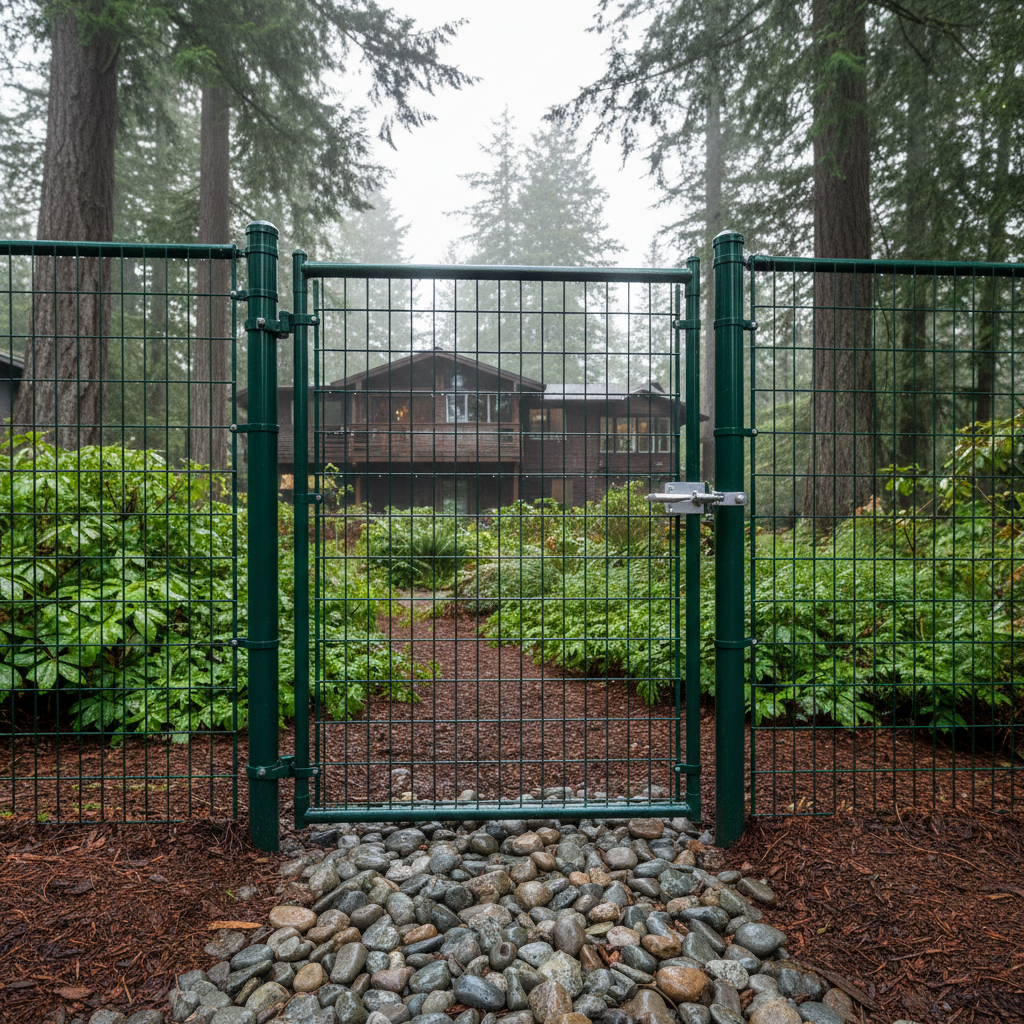
Chain Link Fence Door: Essential for Vancouver Island Homes
Last month, my neighbor in Saanichton watched his gate blow open during one of those sudden January wind gusts we get. His golden retriever made it three houses down before anyone noticed. Not exactly the security upgrade he paid for the previous spring.
That gate looked solid when it was installed. The problem was not workmanship-it was design. It was never built for what Vancouver Island throws at properties year-round.
Living here means dealing with:
- Salt spray that corrodes metal faster than expected
- Strong winds that test every hinge and latch
- Seasonal ground movement that shifts posts and throws gates out of alignment
Most fencing guides treat gates like simple add-ons. They are not.
Your chain link fence door is the hardest-working part of your fence system. Choosing the wrong one creates daily frustration-every time you walk the dog, move equipment, or secure your property.
This guide walks through the real decisions:
- Which gate styles survive coastal conditions
- What hardware actually resists corrosion
- How to size openings for pets, kids, boats, RVs, and equipment
By the end, you will know what your property actually needs-and why spending slightly more upfront saves money and frustration later.
Why the Right Chain Link Fence Door Matters on Vancouver Island
We live surrounded by ocean, forests, and outdoor access-but that environment puts real pressure on property infrastructure.
Your chain link fence door is not just marking a boundary. It is your first line of control:
- Keeping pets from wandering
- Preventing unauthorized access
- Standing up to constant weather stress
Think about what your gate handles daily:
- Dogs pushing against it
- Kids slamming it while running between yard and driveway
- Winter storms catching the panel like a sail
- Boats, trailers, RVs, and equipment passing through
Many homeowners inherit properties with poorly planned gates. Others wait until hardware fails after years of salt exposure. Some install new fencing without realizing the gate determines whether the entire system works.
The challenge is not choosing the cheapest or nicest-looking gate. It is matching style, size, and materials to how you actually use your property.
A pedestrian gate works fine on a small Victoria lot. A Campbell River property storing fishing gear needs something stronger. A coastal property in Ucluelet or Sooke cannot rely on standard galvanized hardware.
This guide focuses on the decisions that determine whether your gate:
- Works smoothly for years
- Or becomes a replacement project in three seasons
What Is a Chain Link Fence Door?
A chain link fence door is a hinged or sliding access point built from galvanized or vinyl-coated steel wire mesh woven in a diamond pattern. It provides controlled access within a chain link fencing system.
It consists of four core components:
- Gate frame Rigid steel tubing that supports the mesh and connects to fence posts
- Chain link mesh and tension system Tension bars or wires keep the mesh tight so it does not sag or unravel
- Hinges These carry the full weight of the gate and absorb wind stress
- Latch or lock Ranging from simple latches to keyed or self-closing hardware
When you open the gate, hinges pivot and the frame swings or slides. When closed, the latch secures the frame and restores the fence barrier.
On existing chain link fences, the gate integrates using the same mesh size and height. When installed properly, the transition between fence and gate is nearly invisible.
The durability of the gate depends entirely on the quality of each individual component.
Choosing the Correct Gate Size
Gate width determines whether your access point solves problems-or creates new ones.
Start by identifying the largest item you regularly move through the opening, not a hypothetical future item.
Common Gate Widths and Uses
Your driveway layout matters as much as width. Trees, slopes, power lines, or buildings may limit swing space.
A 12-foot gate sounds great-until it swings into a garage or neighbor's yard.
Pedestrian Gates (3-4 Feet)
These gates handle daily family use:
- Kids
- Dogs
- Garden carts
- Wheelbarrows
A 3-foot gate is ideal where space is tight. It requires less swing clearance and fits smaller lots where every square foot matters.
These are common in James Bay, Fairfield, and dense Victoria neighborhoods.
Equipment Gates (4-6 Feet)
This is the "working homeowner" size.
A 6-foot gate comfortably handles:
- Lawn mowers
- Tilers
- Contractor wheelbarrows
- Equipment with attachments
Most contractors recommend 6 feet minimum for equipment access to avoid constant angling and lifting.
Drive-Through Gates (10-16 Feet)
Vehicle access changes everything.
- Cars: ~8 ft minimum
- Boats and trailers: 10-12 ft
- RVs and equipment: 12-16 ft
Many Vancouver Island homeowners store boats or RVs on-site. A narrow gate means constant frustration or damage.
Overhead clearance matters too-trees and lines often restrict effective width.
Gate Style Options: What Actually Works
Single Swing Gates
Best for:
- Open space on one side
- Gates under 6 feet wide
Pros:
- Lower cost
- Simpler hardware
- Easier maintenance
Cons:
- Vulnerable to wind on exposed properties
Strong hinges are essential in windy areas like Sooke or Port Renfrew.
Double Swing Gates
Best for:
- Openings over 6 feet
- Balanced space on both sides
Advantages:
- Less swing clearance per panel
- Can open one side for daily use
These are common on properties storing boats or RVs.
Installation must ensure both panels align properly-uneven terrain causes gaps and binding.
A center drop rod is required to anchor one panel when open.
Sliding Gates
Best for:
- Sloped driveways
- Tight spaces
- Wind-exposed coastal sites
Pros:
- No swing clearance needed
- Excellent wind resistance
Cons:
- Higher cost
- More maintenance (track cleaning)
Sliding gates perform well in Ucluelet, Tofino, and other exposed coastal areas.
Coastal Conditions Change Everything
Salt air accelerates corrosion. Standard galvanized hardware often fails within 2-3 years near the ocean.
Coastal installations require:
- Stainless or marine-grade hinges
- Heavier frames
- Deeper concrete footings
Wind exposure increases required footing depth by 40-50% compared to standard guides.
Skipping these upgrades guarantees early failure.
Getting It Right the First Time
A properly chosen chain link fence door:
- Matches how you actually use your property
- Fits available space
- Accounts for wind, salt, and soil movement
The most common mistake is sizing for today instead of five years from now.
Decision framework:
- Identify what moves through the gate
- Measure real clearance space
- Choose a style that fits terrain and wind exposure
- Select materials rated for coastal conditions
Next Steps
Before choosing a gate:
- Measure opening width at top, middle, and bottom
- Check swing or slide clearance
- Note slopes, obstacles, and exposure
- Think about future equipment or vehicles
The team at Dream Team Landscaping has installed hundreds of chain link gates across Vancouver Island. We understand coastal wind loads, salt corrosion, and how to size gates that actually work long-term.
If you want your gate to stop being a weak point-and start doing its job-getting the design right from the beginning makes all the difference.
READY TO TRANSFORM YOUR GARDEN?
Relates Articles
Real landscaping advice from our team—seasonal tips, project ideas, and maintenance wisdom earned over 30 years on Vancouver Island.